Demystifying Book Writing Part II

book for mystifying blog

I am in the process of writing another small book. A particular kind of concentration is required to complete this project.  There may be people who write from pure inspiration; that’s not me.  Inspiration is essential but not enough. Information is equally important, and patience.

The idea for my book took root only a couple of weeks ago. I had been itching to start on a book for a while but needed to hit on something that grabbed my imagination. Once I got the idea it germinated for a few days. Then I started reading. As I read I began to understand what I needed to learn about my subject. At that point my plan was taking clear shape.

However, I never know if a plan has ‘legs’ until I put words down on paper. Usually I just jump in. I find pictures that are interesting, and random bits of fascinating trivia. I’ve grown familiar with my subject by this stage, so there’s context in which to place the material. This is one of the best parts about writing. I know so much more than I did,  because I’ve been studying.

I love that.

As I put material on paper the practicality of my plan is either validated or not. Often the words lead me in a path that diverges from the original plan. That’s also something I enjoy. When this happens, I’m not just writing for others; I’m also writing for myself. Often I inflict my excitement on family and start to tell them about my discoveries.  This exercise is very helpful and I am grateful to my family for the kindness they extend to me.

The need to frame my thoughts into words that make sense to other people–my family–requires discipline. Not only must I speak logically, but I have to honestly observe the reaction to what I believe to be fascinating information. If people are bored, I’m in trouble.

On the other hand, if my family shows more than polite interest in the material I share, there’s a good chance my intended audience will be engaged.

I’m pretty sure where my current book is going, what my next step has to be.  I certainly know where the book finishes (although sometimes I may be surprised by that).  The beginning is down; the path is set.  The middle will be an adventure as I follow the stepping stones, the highlights of history that will direct the story I would like to tell.

One thing I can’t lose sight of is the audience.  If the attention of the audience is lost, so too is my objective.

The way I go about writing a book certainly will not work for everyone.  My ambition in my current project is very modest.  The intended audience is young people, though I anticipate that the occasional mature reader who stumbles upon the book will not regret the experience.

I love to write.  When I’m finished with a book, I pass it on and hope it has a life of its own. For anyone who creates anything, that is a miracle every time it happens.
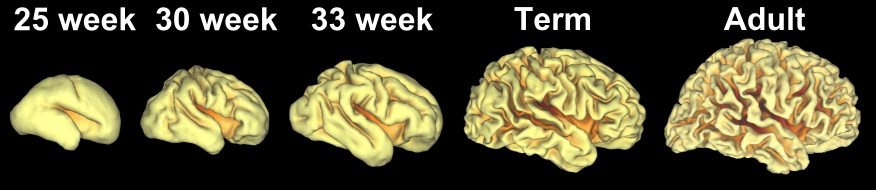

Growing the Brain

In a previous blog I described a study that suggested creative activity encourages brain growth. Yesterday Nature Magazine published the results of another study that looked at brain development. This one linked income level to infant brain size.

Carried out by two researchers, Kimberly Noble from Columbia University and Elizabeth Sowell from LA’s Children’s Hospital, the study showed that infants from lower income families suffer a reduction in brain size. The implications of this study are that income disparity may have life-long, potentially irreversible consequences for children. These consequences go beyond the obvious disadvantage of diminished opportunity.  Even if at some point opportunity is equalized, children from low income homes may never be able to optimally exploit it.

Most of us are familiar with the nature/nurture debate.  Essentially, this discussion weighs the influence of environmental factors such as parenting, neighborhood and schooling against inherited traits. The Nobel/Sowell study, if it holds up, invalidates the debate. According to the study, nature is not a fixed element that can be juxtaposed against environment; it is a function of environment.

The observed effect of income level on brain size is so marked that even within lower income groups, variations of a few thousand dollars result in brain size disparity. If confirmed, the results of the Nobel/Sowell study ought to have a profound effect on the political dialogue that centers on economic equity.

Of thirty-three OECD countries,Chile, Mexico, Turkey, the United States and Israel were the five with the greatest income inequality.  That inequality may translate into millions of lifetimes of relative disadvantage.  Expand the focus of the results globally and a vast population, much of the world in fact, suffers that relative disadvantage.

It is true that we all want our children to maximize the potential with which nature has endowed them. But what if that potential is not fixed by nature? What if potential is at least partly a man-made artifact, a consequence of political and economic policies that perpetuate income inequality?

The authors of the Children’s Hospital/Columbia study are careful to explain that they don’t know exactly which factors influence brain size in infants.  The researchers guess the factors might be the usual suspects: nutrition, exposure to toxins, poor social stimulation. They suggest that tinkering with manageable factors during gestation and afterwards might have a beneficial influence.

However, it seems to me that the researchers pull back from the obvious remedy: close the income gap. This prescription, though obvious, is one that many people will find ideologically unpalatable.  Whenever wealth distribution is discussed there’s inevitably talk about freedom and choice. Which begs the question, what choice is given to an infant who lies in a crib with a destiny diminished by low income? What freedom does that infant have to forge a successful future?

Of course, there’s a larger issue than the individual tragedy of lost potential.  There’s the societal cost.  Children with less potential become adults who are less able. That is not in anyone’s interest, no matter their income level.

brain development
Credit for this image goes to Van Essen Lab(Washington University in St. Louis), in collaboration with Terrie Inder, Jeff Neil, Jason Hill, and others. http://brainvis.wustl.edu/wiki/index.php/Main_Page The image illustrates human cortical development through gestation and into adulthood.

The Massacre at Jallianwala Bagh

As the month of March draws to a close, residents of Amritsar, in northern India, prepare to commemorate a solemn anniversary. Almost one hundred years ago, on April 13, 1919, soldiers under the command of British General Reginald Dyer perpetrated a massacre on unarmed civilians.

The context of the massacre is significant, not only because it lends understanding of how such a thing came to pass but also because it highlights the importance the event had in India’s independence movement.

Throughout the years, British rule in India had been marked by a number of uprisings. The most influential of these insurgencies occurred in 1857.  Known by many in India as the First War of Independence, the rebellion is often characterized in England as the Sepoy Mutiny.  A direct result of this event was the end of the East India Company’s governance of India and the beginning of what came to be called the Raj: direct Crown rule over the colony.

After the rebellion of 1857, reforms were attempted in an effort to placate the Crown’s subjects. These measures, however, did not dampen India’s growing desire for self-rule. In the early 20th century, the campaign for independence gained powerful allies.  Gandhi, Nehru and Jinnah were notable among these.

By 1919 Gandhi’s Satyagraha movement had captured the imagination of the world. Non-violent civil disobedience was not only disruptive to British rule but also became a powerful public relations weapon.  The British government’s reaction to the popularity of Gandhi’s philosophy was to double down on efforts to quell disturbances. Severe restrictions were imposed. These restrictions fueled public resentment.

Shortly before the Massacre a number of precipitating events laid the groundwork for the tragedy. One of these was the arrest of two Satyagraha leaders, Satya Pal and Saifuddin Kitchlew.  Another was a brutal attack on a British school teacher. Although Gandhi preached non-violence, many in India did not heed his message.

A third element in the historic tragedy was that Reginald Dyer was in charge. He had displayed a brutal and racist temperament in earlier actions.  An example of his inclination was demonstrated by his response to the attack on the British school teacher. The woman had been assaulted savagely by a mob. Dyer was outraged, as were many British in India and England.

Dyer decided upon a punishment he felt was appropriate. He instituted what came to be known as the  ‘crawl rule’.   The street where the violence had taken place was cordoned off.  Access to and from that street by any Indian man could only be accomplished if that man crawled, with his face down, the entire length of the street. Dyer explained his rationale:Some Indians crawl face downwards in front of their gods. I wanted them to know that a British woman is as sacred as a Hindu god and therefore they have to crawl in front of her, too.

The final fateful element in the Jallianwala Massacre was the coincidence of a Sikh festival–Baisaki– and a peaceful march designed to protest the arrest of Pal and Kitchlew.  The deadly combination of all these elements came together with tragic effect in Jallianwala Bagh.

On the afternoon of April 13, 1919 General Dyer led a contingent of soldiers into Jallianwala Bagh.  He told his men to take high ground and aim. Fifty rifles with approximately 1600 rounds of ammunition were trained on the religious celebrants and peaceful protestors. Dyer’s order was that the men shoot to kill. As the panicked crowd rushed to the exit, Dyer ordered his men to kill those who tried to get out.

After the Massacre, Dyer explained that the shooting stopped only because he ran out of ammunition. Had he been able to bring machine guns into the area, he would have been able to kill many more.

The toll from the massacre is hard to accurately assess. Official British body count was 379 killed and 1000 wounded. The Indian National Congress put the number of dead at 1,000.

Dyer was hailed as a hero at first in England but was eventually asked to retire when the repercussions from the Massacre became evident. The effect of the Massacre on the Indian self-rule movement was electric. Many  who had previously declined to campaign actively for independence now believed the British had to go. Rabindranath Tagore was one of these people.

In 1920 Tagore wrote a letter to the Crown representative in which he renounced the knighthood that had been bestowed upon him by George V.  Tagore declared that he was going to stand by his countrymen who were , “liable to suffer degradation not fit for human beings“.

Today Jallianwala Bagh has been turned into a memorial. While the whole site commemorates the fallen, one particularly moving monument is called ‘The Martyrs’ Well’.  It is said that 120 bodies were recovered from the well after the Massacre was over.

Martyr's Well
The Martyrs’ Well stands as a memorial to those who perished on April 13, 1919 in the Jallianwala Bagh Massacre.

The essay was adapted from two books published by Rhythm Prism: Rabindranath Tagore and The Modern British Empire, A Brief History.  Both books have a question and answer section appropriate for students.  Each however, is written on a level that would be also of interest to adults.  The language used in this essay is a bit more challenging than that  used in the books.