Today’s post isn’t about me. It’s about one of the most thoughtful bloggers on Steemit: @abigail-dantes. Or, rather, it is about a post she published today: The Romantic Love Delusion.
Which one of us hasn’t wondered why we are attracted to someone. Why we decide to join our fates to another. Few decisions have a greater impact on our lives, and yet, we really don’t understand this one. In her blog today, @abigail-dantes applies her considerable knowledge and insight to this universal question: why do we love one and not another?
I won’t attempt to summarize her essay. I will say that she refers not only to modern psychologists, but also to Plato. For you see, this is not a puzzle for today. It is a puzzle for the ages. Perhaps Plato, thousands of years ago, had as much insight as all the scientists writing on the subject currently.
I recommend this essay. For me, it provided many moments of contemplation. But then, @abigail-dantes always has that effect on me. Be careful if you sample her writing. It can be addictive.
If you check out @abigail-dantes’ blog on Steemit, you can catch up on all her old posts. These are available on the blockchain for anyone to read.
I just opened a new text file. The idea for a book has taken hold. The blank page invites me to express that idea. Oh, this is daunting. What writer has not faced that blank page with dread. And then I realize…that blank page is freedom. Nothing will be there unless I write it.
So, how to start a book without freezing at the prospect of creating something from nothing? Remember I have the freedom to do whatever I want with the page. There are no rules, except those I apply. No expectations, except my own. And failure? I am the only judge, because it is my page, my idea.
If I fail myself, my expectations, I can erase the page. So, why not start? Why not go forward on this adventure, which can lead anywhere I choose.
Poof! There goes writer’s block. You are welcome to borrow my self-talk, if it helps.
I’ll report back and let you know how things are going.
This is a digitally constructed collage. I put together pieces from different classic Chinese paintings and tried to mimic the style of a fourteen-century literati artist.
I’ve done research on China in the past, especially Chinese traditional art, and have written about it here and here. This week I decided to start writing a new book about China. I will use art as a reference point and bracket that reference between two centuries–the fourteenth and twentieth. And I will focus my attention on one city that just happens to straddle the Yangzte River: Chongqing.
It was Chongqing that became the last stronghold of the free Chinese in WWII (Second Sino-Japanese War). And it was there that fierce resistance by the Southern Song Dynasty held invading Mongols off for years.
Why art? Because in China, art has been a vessel for culture and tradition. Through conquest and revolution, art has endured. I find that to be especially true in the literati tradition.
A Word About the Picture at the Top of the Page
The picture was prompted by a contest on Steemit, which I enter every time it’s open. In the contest we are challenged by a fellow Steemian, @shaka, to make a collage from one of his photos. Rank amateurs (like me) and graphic artists participate. Sometimes a good idea prevails over skill…that gives me hope. However, I don’t enter to win. I enter to have fun.
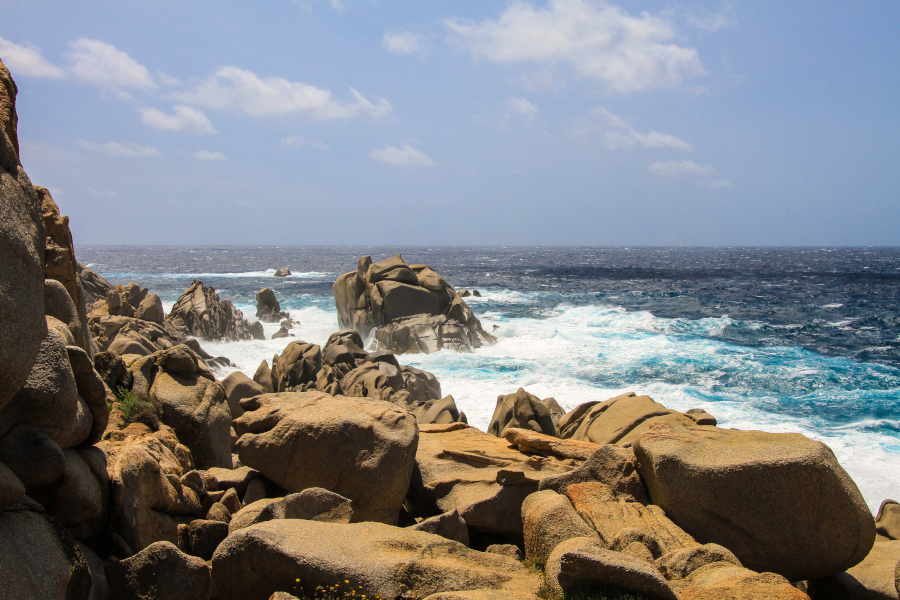
Here’s @shaka’s photo, as it appeared before I made the collage:
Here are the elements that went into my collage:
[By the way, emulating, or even copying an artist is considered to be an homage, in the literati tradition]
The tree was extracted from this picture:
Fishermen, by Wu Zhen. China, fourteenth century. Public domain.
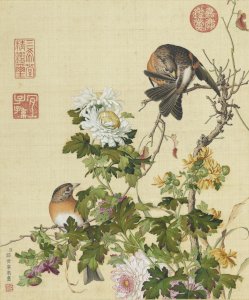
The meditating gentleman was extracted from this picture:





,_Hanging_scroll;_mineral_pigments_on_silk,_Kimbell_Art_Museum.jpg)


 Rhythm Prism Publishing
