Creative Writing and the Brain

brain imaging activity NIH 2
These pictures show magnetic imaging impressions of brain activity. These reflect responses to specific visual stimuli. On the left, the subject was looking at faces. On the right the subject was looking at houses. The MRI frames were provided by the National Institutes of Health.

Just about everyone agrees that writing is an essential skill.  Even the most frugal educators include at least some writing instruction in their curriculum.  What modern science is teaching us is that writing is not only a skill; it is also important in brain development.

Neurologists, with the aid of imaging technology, have been able to pinpoint the areas of the brain that are activated during specific creative activity. This applies not only to writing, but also to music, drawing and even “brainstorming”, which is preparatory to creative work.

During  creative writing activity, the right and left hemispheres of the brain interact with each other.  Although creativity is considered to be  ‘right brain’ centered, it seems that to complete the creative act, the left brain has to kick in.  This phenomenon was observed not only during the writing phase, but also during the period preparatory to writing, when ‘brainstorming’ takes place.  Visualizing, imagining material to be written, precipitates  coordination of different parts of the brain.

A study from the University of Greifswald, Germany looked at brain function in experienced writers.  The individuals in this group had highly developed writing skills.  The brain images of the writers showed increased prefrontal and basal ganglia activation. Also noted in the images was an increased development in the right cuneus, which is involved in reading processes.

Another  study at the University of  Greifswald looked at the creative writing processes during various stages of the work.   The authors of the study noted changes  in brain activity as the work progressed.   In the planning, or brainstorming phase, “cognitive, linguistic, and creative brain functions mainly represented in a parieto-frontal-temporal network” were activated.  During the actual writing phase,  “motor and visual brain areas for handwriting and additionally, cognitive and linguistic areas” were activated.   The authors of the second Greifswald study were careful to distinguish between groups that engaged in creative writing  and those that merely copied material.  The verbal association and integration patterns evident in the creative writing group were not evident in the brain images of the copiers.

Traditionally, creative writing has been part of many school programs because basic writing skills are important and creative writing is considered to be a nice extra curricular activity.  Perhaps it is time to reexamine the importance placed on writing and other creative activities.  Science seems to show that brain development is enhanced by exposure to creative exercise, whether that exercise is in writing, music or art.  Each of these areas seems to activate different parts of the brain.   Educators–and that certainly includes parents–should consider the evidence and think about considering creative activity to be as essential as the established pillars of education: Reading, Writing and Arithmetic.

the three rs John_Chippendall_Montesquieu_Bellew
Master of one of the three Rs, John Chippendall Montesquieu Bellew. Here Mr. Bellew is giving a public reading. He enjoyed a reputation for being a great orator. Image derived from a cartoon, 1873. Copyright expired.

Common Core Values

HarvardCollegeCharter
A copy of the original Harvard College Charter, issued in 1650

There is no dearth of theories on how to educate children. Arguments about technique would be less fraught if everyone could agree on what constitutes a well-educated child. With a common goal in mind, people might willingly travel a common path. But paths diverge early in the education conversation, and the divergence generally centers around values.

Whenever the term ‘values’ is brought up people tend to become defensive, as though the values issue is a construct of the current contentious political scene. It is not. Values have always influenced curriculum.

There was a time, for example, when studying classics was the core curriculum in elementary school. This was a value-determined choice. The moral content of classics was considered to have a salubrious effect on children’s developing psyches.

The oldest universities in the US originally had religious affiliations or religious goals. Harvard was a divinity school for Puritans. William and Mary required all students to be members of the Church of England. Yale University from its earliest days had a close association with Puritanism.

Cotton_Mather
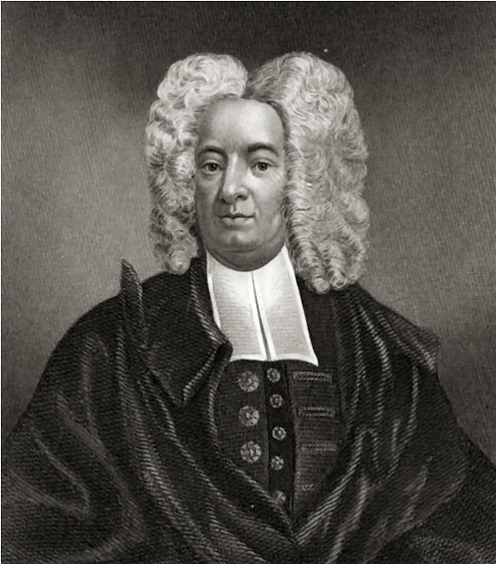
This is a portrait of Cotton Mather, approximate year 1700. The artist was Peter Pelham. In 1703 Mather persuaded Elihu Yale to endow a new university–Yale. Mather believed Harvard had become too radical in its teaching. He wanted Yale to be a place where Puritan principles would be nurtured.

Values are, and always have been, an intrinsic part of education. That doesn’t mean religion has always been associated with schools; in some cases a determination to offer secular, or religion-free education has been a driving motivation. This choice is still an expression of values, the values of diversity, free expression and free association.

Today, as parents, educators and citizens in general try to sort the different educational theories, they must be clear that the discussion is not merely about methodology. Method, the path traveled to achieve a ‘good’ education, is shaped in part by the desired destination.

Do people want open-minded, adventurous citizens who question authority? Do they want obedient citizens who respect tradition and accept the wisdom of their leaders? Do they want technocrats and scientists who forge ahead without complicating work with consideration of consequences and moral content? Or, do people want schools to turn out cosmologists, visionaries who wonder about the unexplained, who ponder the boundaries of knowledge without foreseeing a specific utilitarian outcome?

These are value questions and they are not simple. When parents hand their children over to a school, they hope the school will impart values with which they are in agreement. When taxpayers turn over their money to support education, they want education to produce citizens that are acceptable to their values.

The US is a heterogeneous culture. Not only is the country ethnically diverse, but religious and social values are all over the map. It’s no wonder a tempest surrounds the introduction of the Common Core curriculum. Common Core is an attempt to homogenize education.  In a land founded by rebels, this is a hard sell.

Student Writing Tip #2: Exclamation Marks


frog surprise

Though it is true that even the most information-laden pieces need energy, that energy should come from words, not punctuation.  Just as a human being cannot live well in a perpetual state of excitement, few writing pieces bear up well under a constant stream of commands by the author to be excited or surprised. Readers soon weary of the ubiquitous exclamation so that eventually it loses its power and simply becomes a distraction. Use the exclamation mark sparingly; this handy punctuation tool can assist in adding emphasis, but only if used appropriately.

Weak writing depends on punctuation to convey meaning.  Punctuation enhances and supports a piece; it does not carry the piece.  If you want to show excitement, then show it through description and pacing of narrative.  The following examples demonstrate how that might be done:

Example #1

It was a quiet day.   I walked along the lane and contemplated all the birthdays I’d had in the past.  Some had been fun and  some had not been very enjoyable. However, none of them had been dull.  I began to feel  sorry for myself. Very soon this feeling passed because a group of friends was waiting for me at the end of the lane.  This was going to be a good day after all.

Example #2

I walked home that day, as I did every other.  This was going to be the dullest birthday I’d ever had. No one remembered me.  No one gave me a present or threw me a party.

I refused to cry in public, but tears welled in my eyes and threatened to flow.  I brushed them away so I could see where I was going.

What was that up ahead? Johanna, Bill, Andrew and so many others, waiting for me!  They were laughing, carrying balloons and wearing party hats.  Right in the middle of the park they were throwing a party. I could tell this was going to be the best birthday ever.   

Both example describe the same scene.  The second example is more effective for several reasons. These have to do with punctuation, descriptive language and pacing.

The first paragraph has seven periods and one comma.  The second has many commas and periods.  There is also an exclamation mark and one question mark.  Not only do these various signs give clues to reader about how to read the piece, but they also provide visual interest.

In the first paragraph the narrator tells us about feelings but doesn’t give us any insight into those feelings.  The second example gives details and uses specific descriptive words so the reader can see what the writer imagines.

Now, think of the emotional pace in each example.  In the first example, the emotion is flat. Neither the words nor punctuation provided any energy.  In the second example, however, there is a definite movement in energy.  It begins low and peaks, then subsides again.  The exclamation mark does help to indicate where the piece peaks but it does not do this work alone.  The writer has built to this point and then gently allows the reader settle into a quieter mode again.

Exclamation marks can be very useful, as the use of exclamation shows in the second example.  However, the true power in a piece comes from the writer’s craft, from the use of words that convey emotion and action. Exclamation marks enhance, but do not replace, good writing.