Common Core Values

HarvardCollegeCharter
A copy of the original Harvard College Charter, issued in 1650

There is no dearth of theories on how to educate children. Arguments about technique would be less fraught if everyone could agree on what constitutes a well-educated child. With a common goal in mind, people might willingly travel a common path. But paths diverge early in the education conversation, and the divergence generally centers around values.

Whenever the term ‘values’ is brought up people tend to become defensive, as though the values issue is a construct of the current contentious political scene. It is not. Values have always influenced curriculum.

There was a time, for example, when studying classics was the core curriculum in elementary school. This was a value-determined choice. The moral content of classics was considered to have a salubrious effect on children’s developing psyches.

The oldest universities in the US originally had religious affiliations or religious goals. Harvard was a divinity school for Puritans. William and Mary required all students to be members of the Church of England. Yale University from its earliest days had a close association with Puritanism.
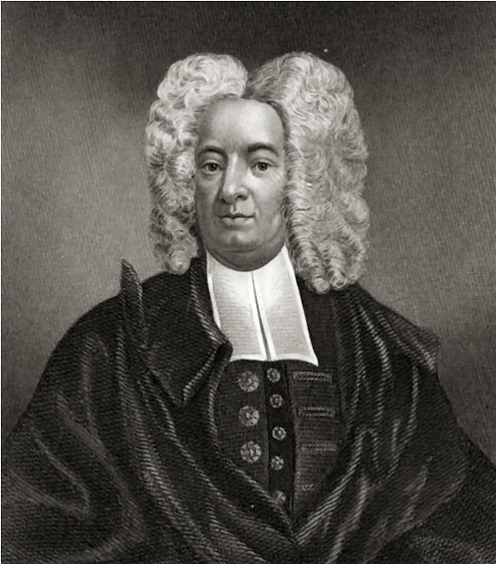
Cotton_Mather
This is a portrait of Cotton Mather, approximate year 1700. The artist was Peter Pelham. In 1703 Mather persuaded Elihu Yale to endow a new university–Yale. Mather believed Harvard had become too radical in its teaching. He wanted Yale to be a place where Puritan principles would be nurtured.

Values are, and always have been, an intrinsic part of education. That doesn’t mean religion has always been associated with schools; in some cases a determination to offer secular, or religion-free education has been a driving motivation. This choice is still an expression of values, the values of diversity, free expression and free association.

Today, as parents, educators and citizens in general try to sort the different educational theories, they must be clear that the discussion is not merely about methodology. Method, the path traveled to achieve a ‘good’ education, is shaped in part by the desired destination.

Do people want open-minded, adventurous citizens who question authority? Do they want obedient citizens who respect tradition and accept the wisdom of their leaders? Do they want technocrats and scientists who forge ahead without complicating work with consideration of consequences and moral content? Or, do people want schools to turn out cosmologists, visionaries who wonder about the unexplained, who ponder the boundaries of knowledge without foreseeing a specific utilitarian outcome?

These are value questions and they are not simple. When parents hand their children over to a school, they hope the school will impart values with which they are in agreement. When taxpayers turn over their money to support education, they want education to produce citizens that are acceptable to their values.

The US is a heterogeneous culture. Not only is the country ethnically diverse, but religious and social values are all over the map. It’s no wonder a tempest surrounds the introduction of the Common Core curriculum. Common Core is an attempt to homogenize education.  In a land founded by rebels, this is a hard sell.

Marie Curie on Education

Theories about education don’t evolve; they erupt.  Most people understand that childhood offers an irreplaceable opportunity to influence minds for a lifetime.   Maybe that explains the furor surrounding the roll-out of the Common Core in communities across the US. While the trend toward rigid standards, uniform curriculum and increased formal instruction seems sound to some, to others it seems a travesty, a squandering of childhood’s most precious gifts:  play, imagination and exploration. Included in this camp would surely be Marie Curie, if she were alive today to express a view.

In a book she wrote about her mother, Marie Curie’s youngest daughter, Eve, described Marie’s views on education.  Eve explained that Marie dreaded sending her children into the sterile, confined atmosphere of a structured classroom.  Marie regarded formal schooling as  “hours of attendance”.  Her philosophy was that children should be encouraged to find their talent through exploration.  It was in this way that Irene, the older daughter, discovered an early interest in mathematics; and Eve, the younger daughter, learned through experimentation that she was fascinated with music.

Essential to the daily regimen of both Curie children was vigorous physical activity.  Marie installed gym equipment at home and took the girls on camping trips. Together the family trekked through the countryside on extensive biking trips.  “Formal” instruction was put off as long as possible.  In its place, Marie devised a scheme with her  colleagues at the Sorbonne.

The girls, and several other children, would be exposed to the finest minds, in a congenial atmosphere.  Each day the children would spend hours with a professor from a specific discipline.  The weeks would be passed in this way, with a casual rotation between specialties and a cheerful approach toward learning.

Eventually Marie’s daughters were obliged to go to formal classes, but not until this was absolutely necessary.  Irene eventually earned a Doctor of Science degree and Eve earned two bachelor degrees, one in philosophy and one in music.

Irene went on to win a Nobel Prize in 1935 and later continued to do groundbreaking research in nuclear physics.  Eve was for a time a concert pianist. She was also a journalist, diplomat and humanitarian.

Irene died in 1956, Eve in 2007. I would be hard to imagine two more accomplished women.  Whether their mother’s approach to education enabled a lifetime of accomplishment, it would be hard to say.  But their lives and achievements certainly make a good argument for those who believe that a a rigid curriculum may not be the path to a great mind.

Student Writing Tip #2: Exclamation Marks


frog surprise

Though it is true that even the most information-laden pieces need energy, that energy should come from words, not punctuation.  Just as a human being cannot live well in a perpetual state of excitement, few writing pieces bear up well under a constant stream of commands by the author to be excited or surprised. Readers soon weary of the ubiquitous exclamation so that eventually it loses its power and simply becomes a distraction. Use the exclamation mark sparingly; this handy punctuation tool can assist in adding emphasis, but only if used appropriately.

Weak writing depends on punctuation to convey meaning.  Punctuation enhances and supports a piece; it does not carry the piece.  If you want to show excitement, then show it through description and pacing of narrative.  The following examples demonstrate how that might be done:

Example #1

It was a quiet day.   I walked along the lane and contemplated all the birthdays I’d had in the past.  Some had been fun and  some had not been very enjoyable. However, none of them had been dull.  I began to feel  sorry for myself. Very soon this feeling passed because a group of friends was waiting for me at the end of the lane.  This was going to be a good day after all.

Example #2

I walked home that day, as I did every other.  This was going to be the dullest birthday I’d ever had. No one remembered me.  No one gave me a present or threw me a party.

I refused to cry in public, but tears welled in my eyes and threatened to flow.  I brushed them away so I could see where I was going.

What was that up ahead? Johanna, Bill, Andrew and so many others, waiting for me!  They were laughing, carrying balloons and wearing party hats.  Right in the middle of the park they were throwing a party. I could tell this was going to be the best birthday ever.   

Both example describe the same scene.  The second example is more effective for several reasons. These have to do with punctuation, descriptive language and pacing.

The first paragraph has seven periods and one comma.  The second has many commas and periods.  There is also an exclamation mark and one question mark.  Not only do these various signs give clues to reader about how to read the piece, but they also provide visual interest.

In the first paragraph the narrator tells us about feelings but doesn’t give us any insight into those feelings.  The second example gives details and uses specific descriptive words so the reader can see what the writer imagines.

Now, think of the emotional pace in each example.  In the first example, the emotion is flat. Neither the words nor punctuation provided any energy.  In the second example, however, there is a definite movement in energy.  It begins low and peaks, then subsides again.  The exclamation mark does help to indicate where the piece peaks but it does not do this work alone.  The writer has built to this point and then gently allows the reader settle into a quieter mode again.

Exclamation marks can be very useful, as the use of exclamation shows in the second example.  However, the true power in a piece comes from the writer’s craft, from the use of words that convey emotion and action. Exclamation marks enhance, but do not replace, good writing.