Creative Writing and the Brain

brain imaging activity NIH 2
These pictures show magnetic imaging impressions of brain activity. These reflect responses to specific visual stimuli. On the left, the subject was looking at faces. On the right the subject was looking at houses. The MRI frames were provided by the National Institutes of Health.

Just about everyone agrees that writing is an essential skill.  Even the most frugal educators include at least some writing instruction in their curriculum.  What modern science is teaching us is that writing is not only a skill; it is also important in brain development.

Neurologists, with the aid of imaging technology, have been able to pinpoint the areas of the brain that are activated during specific creative activity. This applies not only to writing, but also to music, drawing and even “brainstorming”, which is preparatory to creative work.

During  creative writing activity, the right and left hemispheres of the brain interact with each other.  Although creativity is considered to be  ‘right brain’ centered, it seems that to complete the creative act, the left brain has to kick in.  This phenomenon was observed not only during the writing phase, but also during the period preparatory to writing, when ‘brainstorming’ takes place.  Visualizing, imagining material to be written, precipitates  coordination of different parts of the brain.

A study from the University of Greifswald, Germany looked at brain function in experienced writers.  The individuals in this group had highly developed writing skills.  The brain images of the writers showed increased prefrontal and basal ganglia activation. Also noted in the images was an increased development in the right cuneus, which is involved in reading processes.

Another  study at the University of  Greifswald looked at the creative writing processes during various stages of the work.   The authors of the study noted changes  in brain activity as the work progressed.   In the planning, or brainstorming phase, “cognitive, linguistic, and creative brain functions mainly represented in a parieto-frontal-temporal network” were activated.  During the actual writing phase,  “motor and visual brain areas for handwriting and additionally, cognitive and linguistic areas” were activated.   The authors of the second Greifswald study were careful to distinguish between groups that engaged in creative writing  and those that merely copied material.  The verbal association and integration patterns evident in the creative writing group were not evident in the brain images of the copiers.

Traditionally, creative writing has been part of many school programs because basic writing skills are important and creative writing is considered to be a nice extra curricular activity.  Perhaps it is time to reexamine the importance placed on writing and other creative activities.  Science seems to show that brain development is enhanced by exposure to creative exercise, whether that exercise is in writing, music or art.  Each of these areas seems to activate different parts of the brain.   Educators–and that certainly includes parents–should consider the evidence and think about considering creative activity to be as essential as the established pillars of education: Reading, Writing and Arithmetic.

the three rs John_Chippendall_Montesquieu_Bellew
Master of one of the three Rs, John Chippendall Montesquieu Bellew. Here Mr. Bellew is giving a public reading. He enjoyed a reputation for being a great orator. Image derived from a cartoon, 1873. Copyright expired.

Indigenous People of Australia

Truganini
Truganini, reported to be the last full-blooded Palawa from Tasmania. Truganini died in 1876. (Public domain picture, author unknown, copyright expired)

This piece was adapted from The Modern British Empire, Rhythm Prism’s first history book in its Reading for Fun and Comprehension series.

Most recently, the essay was included in Exploration and Conquest: Stories of Indigenous Peoples.  This book is designed for a mature audience.  It includes material on French, Italian, Belgian and Spanish colonialism.  The book tells its stories with the help of pictures. These reveal the experiences of real people who suffered the effects of European colonialism across the globe.

 ♦♦♦

In referring to the indigenous (indigenous means native to, or original) people of a territory, the word aboriginal is often used. The indigenous people of Australia and Tasmania, for example, are usually referred to as Aborigines. This term is convenient but not very accurate. Just as there were different ethnic groups in Europe, so were there different ethnic groups in Australia and Tasmania.

Europeans coming upon the different groups, or tribes, of the new territory did not notice distinctions, only similarities. Among the groups that existed in Australia and Tasmania at the time of conquest are included the following peoples. There were hundreds of groups; these are just a few of them:

*Pitjantjatjara
*Arrernte
*Luritja
*Walpiri
*Ngunnawal
*Awabakal
*Eora
*Kamilaroi
*Muthi Muthi
*Tharawal

It is estimated that before European colonization of Tasmania there were between 3,000 to 15,000 Palawa living there. Britain colonized Tasmania (then called Van Dieman’s Land) in 1803. The British used the island as a penal colony–a place to send prisoners. “Transportation”, as the exiling of prisoners was called, was common practice in England at the time.

Conflict between the British and local Tasmanians grew as settlement proceeded. In the 1820s, conflict became so widespread that it was called The Black War. The Black War has been described as one of the earliest recorded instances of genocide in modern times. Over the years, the Palawa people perished, partly as a result of violence and partly as a result of disease. The last full blooded indigenous Tasmanian,Truganini, died in 1876.


Batman's Treaty
Artist’s impression of Batman’s Treaty, signed in 1835. This is the only known time when Europeans directly negotiated their occupation of lands owned by indigenous peoples in Australia. In this case, the treaty was signed by John Batman and elders of the Wurundjeri people. The treaty was declared invalid two months later by the governor of New South Wales. (Public domain picture, copyright expired, author unknown)

Fostering Curiosity in the Student

eclipse for site

Jonas Salk once said, in explaining his success, “I was curious...” (http://www.achievement.org/autodoc/page/sal0int-1).

In the history of human endeavor it is certainly true that more has been learned from questions raised than from answers given. The tension between theories of education seems always to come down to “traditionalists”, who believe children can learn best in formal environments, and “reformers”, who believe learning flourishes best in an environment where curiosity and imagination are encouraged.

Jonas Salk may have benefited from formal education, but he also came upon his interest in science informally. It was curiosity and a desire to help people that led him to medicine. It was curiosity that led him to investigate the link between the influenza and polio viruses.

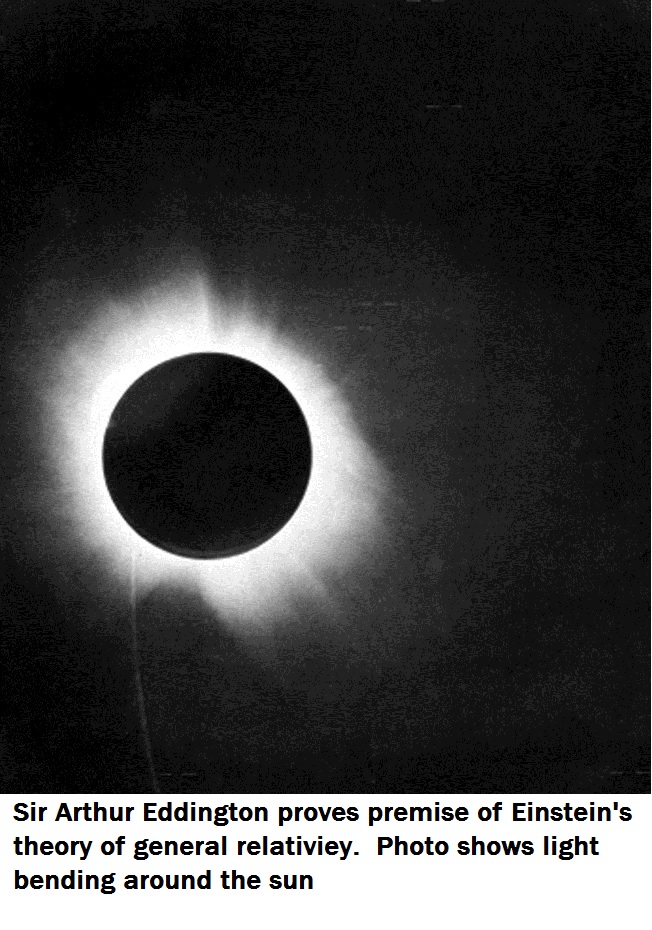
Maria Montessori, Rabindranath Tagore, Marie Curie–even Albert Einstein  did not find a comfortable fit between inquiry and rigid learning routines. Each of these individuals was well educated, in the sense that they had access to a body of information. Each, however, forged new paths, offered new ideas, because they diverged from an established body of knowledge and explored.

The spirit of intellectual exploration cannot flourish in an environment which insists there is only one path to knowledge. This insistence imposes on the student the limitations of the teacher. A future based on the limitations of the past is no future at all.