Haiti: How Colonial Powers Stole Opportunity

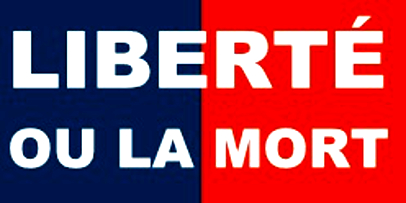
flag-of-indendendent-haiti-1803-1804
Haiti’s first flag, 1803.  Haiti was the first independent nation of Latin America and the Caribbean.

By A. G. Moore

(This is a reblog from a 2011 post that appeared on noplaceforrumors.com.)

It is true that Haiti lies on an earthquake fault and in a tropical storm zone.  From time to time the tiny country  is struck by natural calamity of epic proportions.  This is one of those times. However, it is not Haiti’s geography which has been the nation’s undoing:  it  was greed that did it in, the greed of neighbors and overseers who robbed Haiti of its civic and economic legacy before the nation had a chance to claim its future.

Domingue (the name was changed to Haiti after independence in 1804) was a French colony; sugar and tobacco plantations provided a great income stream to France.  The economy of the island was predicated on slave labor, which was imported in such numbers as to exceed the slave trade in all other territories in the western hemisphere, except Jamaica.  Because of the brutal conditions in which the slaves of Domingue were kept, death rates were very high and there was a constant importation of new captives from Africa.

By the late 1700’s Haiti was not a peaceful place.  Recent African immigrants were not as tractable as second generation slaves might have been and the brutality of the conditions in which the slaves were maintained contributed to the unrest.

By 1791, revolution broke out.  Led by Toussaint Louverture, the goal of the revolution initially was not independence but the abolition of slavery.   Louverture led a successful campaign against the French, but eventually was defeated by treachery.  He ended up in a French prison, where he died of pneumonia in 1803.

Perhaps if Louverture had lived, and been allowed to govern, Haiti might have had a chance.  But that’s not likely.  Because, not only had the arrival of colonialists brought death to the indigenous people (the Tainos) of the island,  not only had these colonialists kept their slaves in such barbarous conditions as to deny the slaves’ very humanity (stories are told of slaves being set upon by dogs; of slaves being boiled in vats of molasses; of slaves being buried alive in ant hills), but the French decided, after Haiti became an independent country, that a debt was owed.  Not by the French to the Haitians, but by the Haitians to the French.

At first, in defiance of this demand from France,  Haiti endured an embargo which denied it the opportunity to benefit from trade of its rich produce.  Eventually, the Haitians submitted and agreed to pay France  to  compensate the former slave owners for the loss of their property.  Haiti was handed a bill and that bill was not cancelled until 1947.  One of the reasons for the prolonged debt service was the conditions of payment.  France insisted that the debt be financed through a French bank, which unilaterally set interest rates and terms.

So much for what France owes to the Haitians.

As to Haiti’s northern neighbor, the U. S.:  from the moment  it became an independent country, Haiti was an irritation to the United States.  For one thing, Haiti presented an example to slaves in the U.S.  that a successful rebellion was possible. Plantation owners in the southern part of the United States were unsettled by this dynamic. Insurrections among U. S slaves, especially in Louisiana, were blamed on the Haitian influence.  U.S.  Assistant Secretary of State Alvey Adee summed it up in 1888 when he called Haiti a “public nuisance at our door”.

The U.S. intervened in Haitian affairs numerous times over the years and U. S. corporations found Haiti a profitable place in which to invest their capital.  By 1915 this investment was so significant that when it appeared to be threatened, Woodrow Wilson, the proponent of “self-determination” for European nations, sent an army into Haiti to secure  U.S. interests.  While the stated aim of the invasion was to neutralize German influence on the Island, subsequent actions of the U. S. government belie this claim.  $500,000 was appropriated from the Haitian National Bank, “for safekeeping”; the U.S. took over all the Customs Houses and ports;  it created a national guard which was an arm of the U.S. government.  Finally, Haitians were prevented from passing a constitution unless that constitution allowed for foreign ownership of property.

So…while it was still saddled with a hundred-year-old debt to France, Haiti found itself straddled by an overlord who extracted essentially whatever profits remained.  Any pretext at self government was denied as the U. S. routinely replaced Haitian leaders who did not endorse U. S. policy.

Haiti never had a chance. If there had been a plan to sabotage its future, to deny it the basic opportunity to rule itself and enjoy the benefits of its own  resources, the plan could not have been more thoroughly realized than it is today.

Besides the ruinous appropriation of Haiti’s revenue,  France and the U.S. were guilty of another at least as injurious a theft:  the theft of governance.  Never in Haiti’s history was it allowed to develop a civic organization which was entirely self-engendered and which acted only in the interests of the Haitian people.  Crop development, land management, trade negotiations:  nothing was left  to the Haitians.  Everything was engineered to profit first France and then the U.S.

Today Haiti is beleaguered by depleted soil, antiquated infrastructure (what remains after the last earthquake), a poorly educated citizenry and an almost total lack of governance. Haiti’s desperate state is not an act of God nor an accident of nature.  It is the result of plunder.   Those who have plundered are responsible.

I don’t know how to fix Haiti.  The amount of money necessary to do that may be more than the U. S. and France think they can afford in this difficult financial climate.  But whatever the endeavor costs, it must be done.  For Haiti is a living legacy of French colonialism and U.S. imperialism.  Like any victim of imprisonment and theft, Haiti has a right to compensation and rehabilitation, no matter the price.

Moments in Life: Book Review

floating-leaf-public-domain

By Eileen Troemel

Usually, when I prepare to read a book of poems, there’s a certain amount of apprehension, unless the poet is known to me. While I enjoy the immediacy of emotion that poetry offers, some authors who use this form do not exercise discipline, and a good poem requires some of that. It is economy of expression that often gives a poem its edge.  And so I began Eileen Troemel’s Moments in Life guardedly–although, to be sure her evocative cover was reassuring.

Readers who also harbor apprehensions about an unfamiliar poet’s work may venture into Ms. Troemel’s aesthetic universe without reservation. There is revealed in her work a refined sensibility, a presence informed by both insight and compassion. Moments in Life is the sort of book one might keep in the bed stand, to sooth and settle the spirit before submitting to the suggestible realm of sleep.

Last night, one poem struck me with special force. Today, I scrolled through Moments in Life so I could find that poem and use it as an example in this review. However, my morning eyes did not see what my mind clearly understood the night before. Other gems caught my attention. This is one of the charms of the collection: it accommodates the mood and the requirements of the moment. A nostalgic inclination, for example, might find resonance in a poem called My Mother’s Kitchen. In more reflective moments, Life’s Cycles might might respond to the inclination to ponder.

One poem that struck me on every reading was Adventures of a Wild Leaf. This poem is brilliant with imagery and takes the reader through stages of anticipation, loss, and then hope.

This volume is not Ms. Troemel’s first. With the skill on display here, that is not surprising. I expect to hear more from this poet in the future. She evidently has a deep well from which to draw.

The Tightrope of the Absurd: A rational Spirituality for the 21st Century and On being Human

sisyphus-tiziano_-_sisifo
Sisyphus, by Titian, 1548-1549. Copyright Expired

By Sybe Starkenburg

The Tightrope of the Absurd is not light reading. I actually began to write about the book before I had finished reading because I wanted to lodge a disagreement with the author. That’s a good thing. A great book is not one that I agree with. It’s one that makes me think, that expands my universe of observation and consideration. The Tightrope of the Absurd does that.

An example of my philosophical falling out with the author follows: Mr. Starkenburg states that “Good is everything that benefits mankind…” and that “the main value of life is life itself”. I took exception to this proposition because I found the two parts of this statement to be in conflict. It struck me, as I read, that the human race is essentially parasitic on earth, that humans are inimical to earth’s existence. It can be argued that, as humans evolve, we consume and destroy the planet that sustains us. Our predatory relationship with the host planet is so extreme that many scientists believe space travel is an imperative. We look forward to leaving this dying orb and colonizing others, so we can feed off them, and move on again. Just a thought I had. Mr. Starkenburg’s book does that to me–makes me think.

Mr. Starkenburg is a well-read man. He brings together ideas from some of the most profound thinkers through the ages. A few to whom Mr. Starkenburg gives deference, I consider to be lightweights, or even disreputable. One of these is Ayn Rand. Mr. Starkenburg and I can disagree about that. What matters is that I care to disagree, that I’m moved enough by his suggestions to take exception to them.

The essence of Mr. Starkenburg’s argument, as I understand it, is this: The only path to humanness, to being truly human, is through rational, conscious and deliberate thought. Religion, in his view, is not rational but is based on belief and custom. Religion, he suggests, is an obstacle to achieving humanness.

Mr. Starkenburg evaluates the need that religion seems to fill in people’s lives. One need, or hunger, that it satisfies is the search for meaning. Can life have meaning without religion? In response to this question, Mr. Starkenburg cites the philosophies of, among others, Jean-Paul Sartre and Viktor Frankl. Sartre asserts that life has no essential meaning, but is merely improvised. According to him, none of us has a script. We merely respond to circumstances as they arise. Frankl, who survived a Nazi concentration camp, suggests that meaning can be found in life but only if it is lived in a way that is true to each person’s intrinsic nature: Be True to Thyself

Weighing the philosophies of Jean-Paul Sartre and Viktor Frankl is an interesting exercise, no matter the outcome. That’s the value I found in The Tightrope of the Absurd. It wasn’t in the strength of Mr. Starkenburg’s arguments, although he solidly supports every position he holds. The value was in the way he built those arguments, the wide array of material he brought into the discussion, and the place he left for me to agree or disagree.

It would be impossible in the space of a short review to do justice to Mr. Starkenburg’s book. To sum up, anemically: Sybe Starkenburg offers a moral and philosophical thesis about how to have a full, thoughtful and positive life. He suggests that empathy is a critical component to this life, empathy not only toward people, but toward other species.

Not everyone will enjoy this book, but readers who are open to new perspectives probably will. And if they are, like most of us, beset at times by a vague uneasiness about existence and religion, this book may suit them. It will not answer every question, but it will address the urge to find answers. It will offer ideas about how to think and where to search for answers to questions that are pushed to the back of the mind. Mr. Starkenburg would surely recommend that these questions be welcomed, because they won’t go away. They’ll lurk in the background and influence every other area of life until they are confronted rationally, consciously, and deliberately.