Bismark: A Life Book Review


BismarckPferd
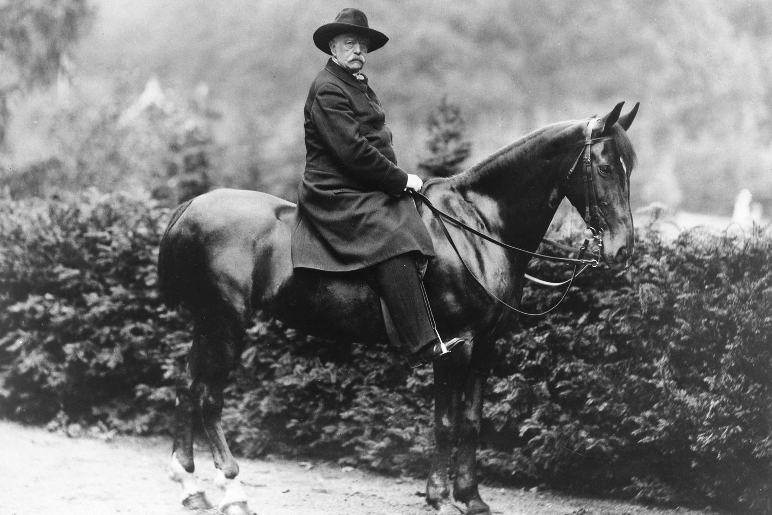
Otto von Bismark  July 1890


In Bismark: A Life, Jonathan Steinberg suggests that the modern German state had its origins in the imagination of Prince Otto von Bismark. However, Steinberg builds his case with such apparent animus toward the subject that the value of this book is somewhat undermined.  Steinberg implicitly lays at Bismark’s door responsibility for WWI (by creating the German Empire and buttressing autocracy), WWII (by reinforcing the Junker class and doubling down on militarism), and genocide of the Jewish people (by fueling antisemitism).

Steinberg’s approach is comprehensive. He traces Bismark’s rise to power and attempts to lay bare the state-builder’s multiple motivations. In support of his analysis, Steinberg provides extended excerpts from Bismark’s correspondence and from other first-person accounts. The portrait of Bismark that emerges is more demonic than Machiavellian.

Bismark, by Steinberg’s account, was a hypochondriacal, reactionary, anti-Semite, an ingrate with an unbridled thirst for power. Despite Steinberg’s compilation of evidence, the reader is left with doubts about the integrity of this author’s presentation. His loathing for Bismark is so manifest that we feel bias must inevitably influence judgment.

However, because Steinberg’s book is well resourced, it has much to offer. I was interested, for example, to learn how Germany reacted to the revolutions of 1848. Also interesting was the tension between the papacy and secular heads of Europe. Most fascinating was Bismark’s effort to weaken a rival, France, by aligning himself with Russia. I wondered, as I read, if there was a corollary with present times–with Donald Trump’s expressed criticism of NATO and his avowed admiration for Russia.

I recommend this book, but with reservations.  For a complete view of Bismark, it would be a good idea to read a second biography.  Many questions, in my mind, remained at the book’s end.  Chief among these was, what was Bismark really like?

A. G. Moore     June 2017


The Irish Brigade: Book Review

irish brigade Gen._Robert_Nugent_and_his_staff,_Irish_Brigade,_Washington,_D.C._(vicinity)
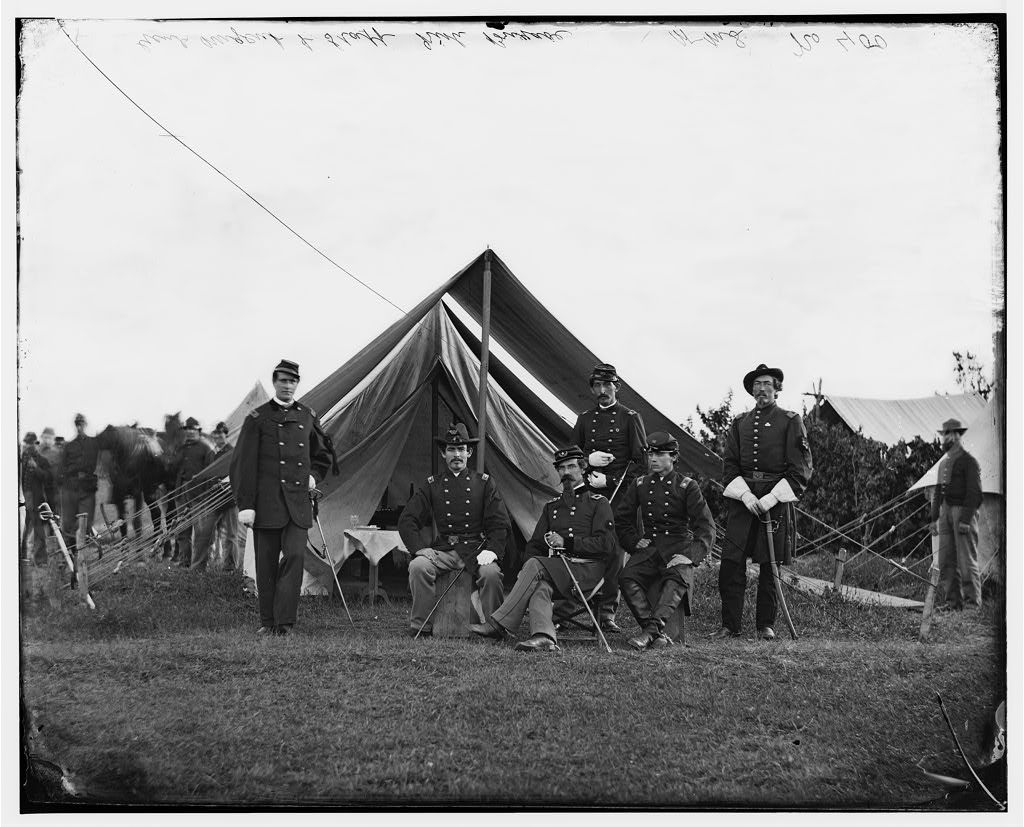
Brigadier General Robert Nugent poses with the Irish Brigade in Washington, D.C.   1865


“The Irish Brigade”, by Steven J. Wright, is a slim volume that packs an emotional wallop far out of proportion to its size. In a mere sixty pages, the book offers vivid photos and moving descriptions of the Irish who fought in the United States Civil War. There is no shortage of heroism or honor on display in this book. But just as these traits are heralded, so is the tragedy of war driven home.

Most of the people featured in the book did not survive the War. This is a startling reality. Letters to family from fallen soldiers highlight the toll war took on millions from both the North and the South. Although some Irish did join the Confederate effort, overwhelmingly, these men fought with the Union army.

Though sourcing in this book is necessarily selective, because of its size, the material cited is very affecting. A wealth of first-person accounts captures the experience of war.

I found the book in a local library. It is listed for sale in most places as a collectible or rare book. The book would be of particular interest to Civil War buffs or to those who would like to learn about Irish-American history.  I highly recommend Steven J. Wright’s “The Irish Brigade”.

A. G. Moore  June, 2017

Art Literacy

art literacy excerpt2
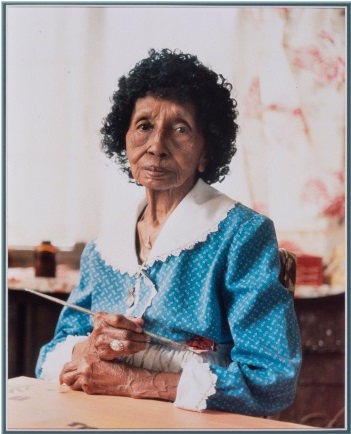
Clementine Hunter


In November of 2016 I read about a symposium that addressed the challenge of educating immigrant children.  The symposium was held at the Roosevelt School District, in Roosevelt, New York.  Not long after this symposium was held, I read that research indicates children from disadvantaged backgrounds benefit from cultural enrichment.   These two bits of information were connected in my mind and from that connection grew the idea for Art Literacy

Art Literacy is a showcase for artistic expression, and an invitation to create art.  The picture at the top of the page, of Clementine Hunter, and the excerpt below this paragraph, are typical of material students will find in the book.   A total of forty-three feature images are presented.  At least one smaller image accompanies the feature image.   In the case of Clementine Hunter, there are two feature images and two companion images. 

A caption that describes Clementine Hunter’s personal history:

clementine Blurb

A smaller image that helps to introduce Clementine Hunter to students:

clothesline website
Clothesline, by Clementine Hunter.  The Picture is Credited to the Ethel Van Derlip Morrison Fund.


With every picture, there is an invitation to act.  Students are asked to write a response and to create a visual work of art.  They are reminded of art’s essential nature:  It is a genuine expression of an individual’s perspective and experience.   

The kinds of images featured in Art Literacy range from a Sami family (Lapland) posing in front of a traditional residence, to children playing along the seashore in Zanzibar.  Subjects covered include Stone Age cave art and NASA space missions.  

There are quotes from James Baldwin, and there is poetry from Rabindranath Tagore. 

The question is asked at the beginning of the book, What is art?  By the end of the book, students may be prepared to answer,  Art is a form of communication, a way for people to share their perceptions and insights.

A supplemental guide to Art Literacy has been created.  This consists of keyed sheets that offer background information on some of the covered topics.   The sheets can be copied and distributed to students who want them.

Collages introduce the five thematic sections: Animals in Art, Fantasy in Art, People in Art, Places in Art and Things in Art.  The collages are visual demonstrations of the book’s operating theme: Let imagination be the guide as experience and perception are explored.

A representative collage, from the section entitled Fantasy in Art, is shown below:


collage fantasy elsas pig2 website

Art Literacy is for sale on Amazon.  However, the long-term plan is to set up an apparatus through which the book and accompanying material can be distributed, at no cost, to students.  


art literacy front cover website


A. G. Moore    June, 2017