Steemit

EBitcoin Ecosystem by eBitcoin Foundation public
Graphic by eBitcoin Foundation, released into the public domain, 2018


A couple of weeks ago my son persuaded me to open an account on Steemit. The environment on this site is completely different from traditional blogging, or any social media platform I’ve sampled. Steemit has an economic component, although that aspect of the forum seems a bit remote to me, at the moment. There is a system of rewards, upvotes and downvotes (rarely used). The idea is that the more good content a blogger provides the more “Steem” power they will accrue.  Eventually, Steem dollars can be earned.

Steemit is not an egalitarian platform, but then, what is? It seems there are whales and minnows. Whales have an enormous amount of influence and minnows have virtually none. However, there’s a sort of nurturing that is encouraged, in which minnows are rewarded simply for trying and being part of the system.

As I explain Steemit, I don’t really understand too much about how it works. The essence of “Steem Power” is steem dollars. The platform is based on blockchain technology, which is also the basis of Bitcoin. I don’t understand blockchain, Bitcoin or Steem dollars. It doesn’t matter to me. This is a new frontier and I want to understand. I think I want to be a part of it, but since I don’t know exactly what it is, I’m treading lightly.

I’ve “met” a few nice, encouraging people on the forum. And there is a kind of excitement that is not present on other social media sites.  Certainly, the financial incentive adds to the energy. And then, I think, there’s the idea that blockchain technology pushes back against traditional currencies.

We are in a climate of rebellion. People sense the reins of financial and political control have been appropriated by powerful forces, forces that ordinary people cannot touch. Blockchain is a way to fight back.

I just finished a post for Steemit, which, after a few refinements, will go up later today. I can’t show the post here, because blogs on Steemit are supposed to be unique. And so will mine be. However, I will continue to post here, with the WordPress community.

Where will the new adventure take me? Will blockchain endure? Will Steemit endure? It’s hard to say. The train has left the station and I’ve reserved a seat. I’ll keep you posted.

Recesses: A Really Dark Poem


Swamp public

I’m posting a poem here with a bit of hesitation.  It is a dark piece, and not at all representative of my writing.  I blame the darkness on my subconscious.  As readers of this blog may know, I grew up in challenging circumstances.  In a previous blog, A Burial, I refer to a grim episode in which several of my dogs were poisoned.  The family never discovered who poisoned the dogs.  Each poisoned pet had to be buried.  Since my father was absent, my older brother took charge, as he often did.

It was winter, and the ground was frozen.  My brother was obliged to improvise.  He found a bog, deep in the forest, in which the deceased animals’ bodies could be dispatched.  The mud would absorb whatever was thrown onto it.  This constituted a sort of burial, the best he could manage.

Years later, when I began to write, I searched my mind for inspiration.  The poem posted below came to me, almost in an unbroken stream.  There’s little doubt I was healing an old wound.  In the poem I imagine a murder, in a swamp, but this time the murderer doesn’t get away.  My subconscious metes out a rough justice.

Here’s the poem.  Beware: It is dark.


Recesses

In the rustle of the swamp reeds

In the ceaseless crackling clamor

Of the swamp’s pursuers and pursued

A very careful and interested listener

Might have heard

The faintest sigh

An expiration of breath

Blended casually and perfectly

With the flow of generation and degeneration

So its individuality

Its particularity

Was lost


No one heralded its passing

Except the swamp’s general chorus

Of insect and animal activity

Which signaled without prejudice

The birth and demise of multitudinous creatures


In the wetness of the earth

In the dark and malodorous puddles

Seeping through an eternity of swamp grass

The smallest rivulet of blood tinted the ground

Blended with greater streams and

Became indistinguishable

From the enveloping deepness of their color


Through tangled trees and weeping weeds

He fled

The mute rebuke of her still presence

Propelling him

The hours since he killed

Darkened the earth

Until night dwellers rose from their nests

And joined the uncensoring cacophony


He knew this dense and murky world

It would have granted him a bed

Had he stopped

He could not

Panicked by the specter of her face

He pressed on

Past the creeping oozing things

The silent crawling essences in the mud


He was wet

From his excretions

From excretions of soil and plant

His shoes heavy with moisture

His clothes clammy

He became as like the swamp as he could ever be

And it became less a friend to him

He who confided in the swamp

Discovered its treachery


He was lost

The absolving obscurity which had drawn him

To commit this deed

Ordained his destruction


The first rays of sunrise did not penetrate

To the depths of the swamp’s floor

Rather they gradually colored the dense undergrowth

And muddy pools of its recesses

Only moments before those traces of color appeared

He fell


His body slumped to earth

Perhaps his head hit a rock

Or an exhausted vessel hemorrhaged

A rivulet of blood

Tinted the ground

Blended with greater streams and

Became indistinguishable

From the enveloping deepness of their color


In the depths of a wild and immense swamp

Amidst the hawing and cawing

Of embattled entities

One predator and his prey

Rested

The swamp protected the secret of its protégé

And with the force of irresistible passivity

Received the final traces of his crime

Into the fabric of its all absorbing life

Art and Life

plum website Lu Zhi
Plum Blossoms, by Lu Zhi,  Public Domain

Increasingly, I see no distinction between art and life, although there is a sense of the word “art” that suggests fabrication.  As a writer, or someone who loves to write (sometimes it feels pompous to call myself a writer), I have found art to be simply another form of expression, one that flows naturally as a complement to my words.  This is a view that traditional Chinese artists embrace, particularly those artists known as literati.

In literati painting, inscriptions on the work are intrinsic to the art.  The literati derive their inspiration from nature, tradition and philosophy.  In literati painting, art is an expression of character.  Technical skill, or “artifice”, is less important than the genuine inspiration evident in the work.

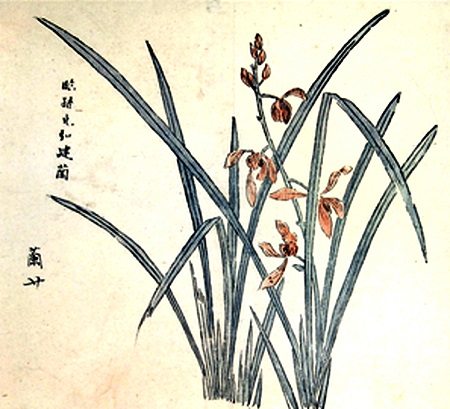
Traditional Chinese art often features one of four themes known as the Four Noble Ones or, the Four Gentlemen.  These themes are the plum, orchid, bamboo and chrysanthemum.  The essay below is adapted from my book, Four Masters of Yuan and Literati Art: Tradition in China from Mongol Rule to Modern Times.

The Four Gentlemen in Chinese Art


Literati artists have an affinity for nature. In their response to nature they believe they are revealing essential qualities about their own character. The qualities they hope to cultivate in themselves, they believe, are innate to certain plants. Four of these, called The Four Gentlemen in Chinese Art–the bamboo, chrysanthemum, plum and orchid–are said to embody different aspects of a noble character.  In fact, the plants are also called The Four Noble Ones.  Each of these plants has been featured across the centuries in exquisitely expressive art.


china bamboo elegant stone ni zan website public
Wood, Bamboo, and Elegant Stone, Ni Zan Public Domain

Wood, Bamboo and Elegant Stone, a painting by Yuan Dynasty artist Ni Zan (above), is part of a long tradition that reveres this plant.  Bamboo is seen as a natural embodiment of longevity, humility and endurance.

chrysanthemum website ong
Chrysanthemum, by Ong Schan Tchow, with an inscription by Lin Sen, President of the Republic of China.  Public Domain

Ong Schan Tchow, a twentieth-century painter, devoted a book to the study of chrysanthemums. This flower holds a special place in Chinese culture because the flower was first cultivated there. Chrysanthemums blossom in autumn, when winter is looming and other flowers are fading. It is the flower’s ability to flourish when others perish that makes it a metaphor for withstanding adversity.

Lu Zhi, an artist from the Ming Dynasty, was also a calligrapher and poet. His painting, Plum Blossoms, is featured at the top of this page. The plum tree blossoms in winter. This winter bloom, in harsh circumstances, represents to the Chinese the qualities of endurance and prosperity.

orchid 96 smaller
Orchid, by Hu Zhengyan, Public Domain

Another Ming Dynasty artist, Hu Zhengyan, was also a printer and calligrapher. He was a traditionalist who featured a variety of simple, natural themes in his painting. The image presented here is “Orchid”.  In the orchid many see qualities of humility and grace. The orchid blossoms in remote locations and often exudes its fragrance in solitude. The nobility of quiet repose is much admired in classic Chinese art and poetry.