Wisdom of the Heart: Book Review

Diana Coogle and Barbara Kostal

native american picture writing
The image represents a petition sent to the United States government by several Native American peoples.  The figures represent the petitioning tribes.  Approximate date: 1920. This image and further explanation may be found at: Wikimedia Commons, Wells American Indian Picture Writing. png


The authors of “Wisdom of the Heart,” Diana Coogle and Barbara Kostal, offer a vivid palette of verbal and visual art. Their response to stimuli is visceral, although it is evident that both women bring to their experience a honed sensitivity.

As Barbara Kostal (the painterly half of this collaboration) explains in the Introduction, her influences are many. These include, significantly, Native American traditions. I found the paintings with Native American symbolism to be the most memorable. That is my organic, not my intellectual response. I revisited several of these paintings as I perused the book. Among those that impressed me most were “Fiat Lux” and “Transcendence”.

Diana Coogle offers a verbal counterpoint to each of the images painted by Kostal. Coogle does not analyze the pictures intellectually. She allows them to find a place in her psyche and her heart. She is clear that her responses are the product of experience and intuition. While the reader may bring a different perspective to the art, Ms. Coogle’s observations enhance appreciation.

“Wisdom of the Heart” is highly personal. What makes the personal expressions in this book relevant to others is the intelligence and sensibility of the authors.

I recommend “Wisdom of the Heart”. Even the most determined pragmatists will find, after spending time with this book, that they have enjoyed peace and inspiration. That is time well spent.


A. G. Moore  July 8, 2017

Seasons of the Heart: Book Review

Yolanda Grace Guerra

cat seasons of the heart.jpg


Poetry offers a window into the character of an artist, as few mediums do. In Yolanda Grace Guerra’s “Seasons of the Heart”, readers are acutely aware of this window because the poet writes in a clear, straightforward voice—a voice that is compassionate, perceptive and wise.

Each poem in this collection is accompanied by a date. The poems cover approximately 40 years of effort. Although the compilation offers a thematic arrangement of the work, I tried to read the pieces in chronological order so that I could see how the poet evolved as she matured. Surprisingly, the early poems reflect, to a significant degree, the wisdom and insight of the later work.

For example, “My Father”, written in 1964, describes Ms. Guerra’s father in his declining years. The poem begins: “Each day that comes will bring the face of yesterday”. These words are arresting in their mix of simplicity and understanding. As the poem progresses, Ms. Guerra is unflinching in her observation: “I wake each day to find a gray old man—who now stumbles in the dark as he thinks of yesterday”. And finally, she ends with: “He cared for us, he must have once—he cannot be my father”. Remarkably, Ms. Guerra was only 23 when she wrote these lines.

“Seasons of the Heart” was compiled by Ms. Guerra’s daughter, Sylvia Stankewich, who has left her name out of the book. I credit her here because she has created a fine tribute to her mother and has given the rest of us a gift.

Not all the poetry in “Seasons of the Heart” is weighty and profound. Whimsy steals into the work, as in the fanciful “The Cat Who Wanted Wings”. Here we meet a “foolish” cat who wants to sprout wings. However, we are advised, if this ambition is realized, the rats will grow fat. We are left at the end with the image of a fat cat, sitting on a branch. This misguided animal tries “to tweet, but only a meow would come”.

Readers are fortunate that Yolanda Grace Guerra recorded her life as she lived it. And we are fortunate that her daughter saw the value in her mother’s words and the merit in keeping a promise to publish these poems posthumously.

I highly recommend Yolanda Grace Guerra’s “Seasons of the Heart”.


A. G. Moore  July, 2017

Bismark: A Life Book Review


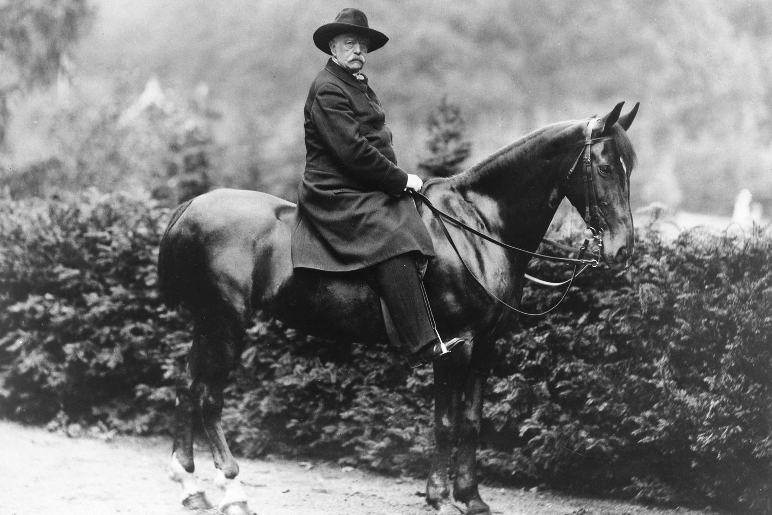
BismarckPferd
Otto von Bismark  July 1890


In Bismark: A Life, Jonathan Steinberg suggests that the modern German state had its origins in the imagination of Prince Otto von Bismark. However, Steinberg builds his case with such apparent animus toward the subject that the value of this book is somewhat undermined.  Steinberg implicitly lays at Bismark’s door responsibility for WWI (by creating the German Empire and buttressing autocracy), WWII (by reinforcing the Junker class and doubling down on militarism), and genocide of the Jewish people (by fueling antisemitism).

Steinberg’s approach is comprehensive. He traces Bismark’s rise to power and attempts to lay bare the state-builder’s multiple motivations. In support of his analysis, Steinberg provides extended excerpts from Bismark’s correspondence and from other first-person accounts. The portrait of Bismark that emerges is more demonic than Machiavellian.

Bismark, by Steinberg’s account, was a hypochondriacal, reactionary, anti-Semite, an ingrate with an unbridled thirst for power. Despite Steinberg’s compilation of evidence, the reader is left with doubts about the integrity of this author’s presentation. His loathing for Bismark is so manifest that we feel bias must inevitably influence judgment.

However, because Steinberg’s book is well resourced, it has much to offer. I was interested, for example, to learn how Germany reacted to the revolutions of 1848. Also interesting was the tension between the papacy and secular heads of Europe. Most fascinating was Bismark’s effort to weaken a rival, France, by aligning himself with Russia. I wondered, as I read, if there was a corollary with present times–with Donald Trump’s expressed criticism of NATO and his avowed admiration for Russia.

I recommend this book, but with reservations.  For a complete view of Bismark, it would be a good idea to read a second biography.  Many questions, in my mind, remained at the book’s end.  Chief among these was, what was Bismark really like?

A. G. Moore     June 2017