Star Strangled Banner: Book Review

ireland-free-countywaterfordcountryside
County Waterford Countryside Near Dungarvan, Ireland: Photo by Jorge 1767

By  Dan O’Donnell

When I respond well to a poet’s work I try to understand why. In Dan O’Donnell’s “Star Strangled Banner”, I don’t have to search long for a reason. His poetry resonates with a yearning that echoes in every heart that ever left home. His yearning is not merely for a home but for a past. And in this, his work is universal.

The Irish flavor of Mr. O’Donnell’s work is inescapable. He is “Paddy”, “born from the sod”, working the sod and, finally, dying and being buried “under the sod”. Mr. O’Donnell’s poetry extends to subjects besides his Irish roots. There’s age, and love, hard labor and the burden of corpulence. But it is his Irish-themed poetry that affects me most. Perhaps that’s because my mother-in-law was from Roscommon and spoke often of the hard early years when she would cut peat to burn in the fire. The grand houses she passed on the way to school were remote from the reality of her life.

Mr. O’Donnell’s last poem, “Ireland”, is my favorite and it is a perfect ending piece. “Although I have nearly always been in exile…my mind is free to send me back,” he begins.” He writes, “Every day is long with the stranger.”  However, he continues, clear memory “of a far-off past eases my yearning and helps me to send in the day.”

Though pleasing and well-crafted, his poetry falls short for me in only one respect. He strains at times to find a rhyme. The rhyme is not essential and gives an occasional poem a forced quality. However, this minor point does not detract from the overall quality of his work.

Take the time to read Dan O’Donnell’s “A Star Strangled Banner”.  It would be a hard heart indeed that could not take pleasure in this poetry.

A. G. Moore  1/8/2017
The Seasons Suite

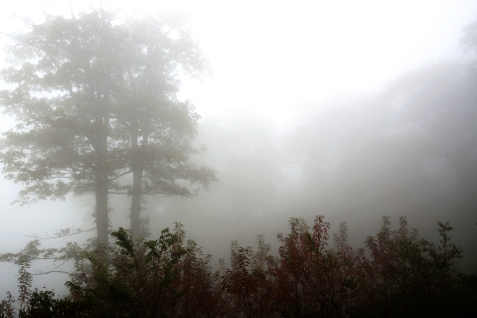
foggy-1754396_1920

By RJ Sobel

Just about everyone can learn to play the piano, but not everyone is a musician. And most of us can write verse, but few of us can boast that we are poets. RJ Sobel can claim that title without reservation.

“The Seasons Suite” comes in four slim volumes. Thematically, the collection could have come in one volume, but the physical separation of the books helps to clarify the mood of each ‘Season’. I wondered, as I opened my first volume, what another person in another place would have chosen. “Winter” seemed right for me, because that is the season nearest to my time in life, and I found the poems in this volume to be the most affecting.

However, there are powerful poems in the three other volumes. “Fall”, for example, offers the jarring, “The Modern Way”: “We spent our toll….For unslakeable consumption…”  And then, “Spring” stirs with, “Business Lunch, Ballad of Malagusta Street”. In this poem, we are manipulated, skillfully, to a certain soft response. A less subtle writer might have overplayed, and tried to wring pathos from this street drama. But Mr. Sobel, in settling for less, gets more. I returned, several times, to read the poem, and will no doubt return again.

Many of the poems in the collection deal with a relationship and its evolution over time. The final poem in “Winter’, entitled “Repose”, draws on the sense of privilege and fragility the aging feel: “I wait with you in quiet astonishment for yet perchance another year.” Time is allotted, whimsically, and the poet marvels that he is among the lucky to survive the years, and, moreover, to share that survival with another.

While the four volumes in “The Seasons Suite” may be viewed as individual chap books, I received them from the author as a box set and it is as a set that I have read them. My inclination is to recommend that the books be considered together because they complement each other.

RJ Sobel’s “The Seasons Suite” is a worthy collection of poetry. I highly recommend it.

A. G. Moore 11/2016

Moments in Life: Book Review

floating-leaf-public-domain

By Eileen Troemel

Usually, when I prepare to read a book of poems, there’s a certain amount of apprehension, unless the poet is known to me. While I enjoy the immediacy of emotion that poetry offers, some authors who use this form do not exercise discipline, and a good poem requires some of that. It is economy of expression that often gives a poem its edge.  And so I began Eileen Troemel’s Moments in Life guardedly–although, to be sure her evocative cover was reassuring.

Readers who also harbor apprehensions about an unfamiliar poet’s work may venture into Ms. Troemel’s aesthetic universe without reservation. There is revealed in her work a refined sensibility, a presence informed by both insight and compassion. Moments in Life is the sort of book one might keep in the bed stand, to sooth and settle the spirit before submitting to the suggestible realm of sleep.

Last night, one poem struck me with special force. Today, I scrolled through Moments in Life so I could find that poem and use it as an example in this review. However, my morning eyes did not see what my mind clearly understood the night before. Other gems caught my attention. This is one of the charms of the collection: it accommodates the mood and the requirements of the moment. A nostalgic inclination, for example, might find resonance in a poem called My Mother’s Kitchen. In more reflective moments, Life’s Cycles might might respond to the inclination to ponder.

One poem that struck me on every reading was Adventures of a Wild Leaf. This poem is brilliant with imagery and takes the reader through stages of anticipation, loss, and then hope.

This volume is not Ms. Troemel’s first. With the skill on display here, that is not surprising. I expect to hear more from this poet in the future. She evidently has a deep well from which to draw.
