Trailer Dogs

dog for trailer dogs
Ellen Garrison

Ellen Garrison experienced life-changing events. She lost her business, her home and much of her savings. As she readily admits, her problems were not unique. After 2008, many people, not only in the US but across the world, were in similar circumstances. What to do? Ms. Garrison considered her choices. Weeping and gnashing her teeth was one of them. There was a bit of that, and then she picked herself up and wrote a book. That book, Trailer Dogs, doesn’t make the proverbial lemonade out of lemons. What it makes is closer to a few strong Margaritas.

Ms. Garrison is angry. That is understandable. She doesn’t deny her anger, she channels it. This book could have been a diatribe filled with hatred and blame. Instead, it became an acerbic comedy, akin to a stand-up routine. The author takes sharp aim at hapless targets. Fortunately, her default perspective, toward people and animals, is kindness. Harsh talk and barbs do not translate into hostile action. Quite the contrary.

I’m not a fan of stand-up comedy. Ms. Garrison’s critical observations were off-putting to me. But she won me over with her generosity, toward everyone and everything. There are characters in this book that would have tried my patience. I’m not sure I would have extended the kindness to them that she did.

If you enjoy stand-up comedy, this book is for you. If you’re sitting comfortably at home and believe you’re in no danger of losing that home, this book may be for you also. And if you’ve ever told a trailer park joke, this book is especially for you.

Ms. Garrison writes about a community that is like every other community. It has the young, the old, the eccentric, the usual. Instead of disparaging the community in which she has become an involuntary member, she embraces it. That is a tribute to her generosity and insight. I might not have enjoyed her humor, but I certainly did enjoy getting to know her.


A. G. Moore, August 2016

Street Whys: Book Review


kingston Beers_Atlas_Page053-054
This is a picture of Kingston New York, c. 1875, from the Beers Atlas of Ulster County. Copyright expired

E. M. Ford

Street Whys was given to me by a friend who knew I had grown up in a Hudson Valley community. Kingston, where all the streets identified in the book are located, is located along the Hudson River and is one of the oldest cities in New York State. This book represents a lifetime of research by E. M. Ford, a local historian. The breadth of Mr. Ford’s knowledge is impressive. While the intended audience may seem to be limited to those who live in or near Kingston, this is by no means the case. The book is a study in the development of an American city. By tracing the history of every highway and byway, Mr. Ford delves into the lives and biographies of people responsible for Kingston’s growth from its earliest days.

One of the more delightful aspects of the book is its attention to detail. Mr. Ford is not careless. He displays a historian’s temperament as he fastidiously acknowledges uncertainty about the provenance of certain street names. Of course, many streets are named after significant townspeople. I did amuse myself by looking for the names of my ancestors and found among the many who were listed some who were distant, long-deceased relatives. These family names were common in the Northeast and throughout the United States during the Colonial era.

E.M. Ford deserves great credit for creating such a responsible book of local history. Though it is not likely to attract a wide audience, the book nonetheless is a valuable contribution to the historiography of the early settlement of the U.S. This is not the kind of book that a reader ever “finishes”. Rather, it will become an accustomed presence on the shelf, one that brings pleasure each time it is perused and the wealth of information contained within is rediscovered.

If you like history and are curious about the foundation of the U.S., read this very interesting book.


A. G. Moore

Complete Nonsense: Book Review


review champman AlbertiDisk1
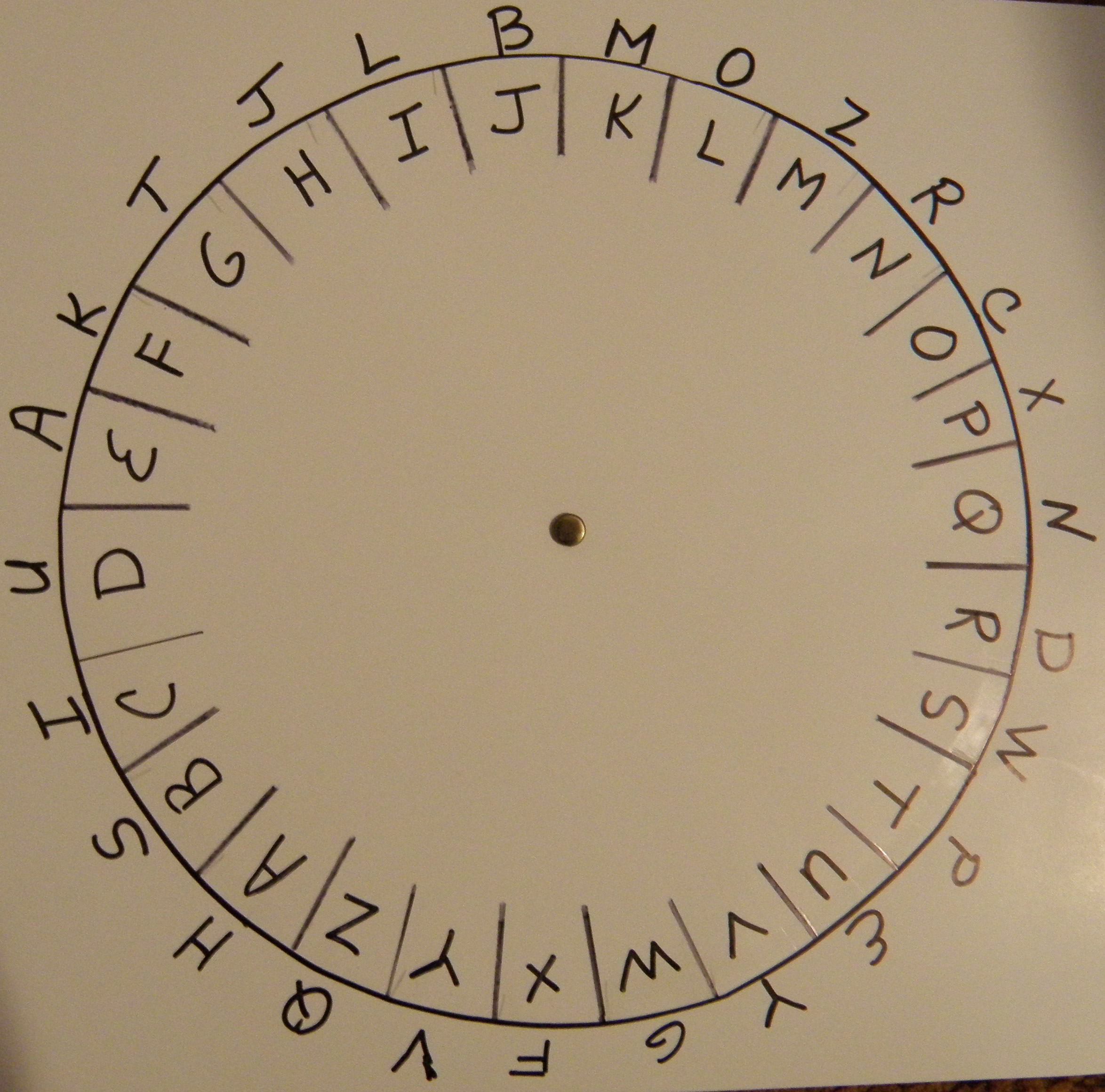
Picture of an Alberti cipher disc, by J. Stempin


By M. Chapman

Molds can be broken. Sometimes it’s by accident and sometimes it’s deliberate. In the case of Mr. Chapman’s poems/piece/essay–the rupture is definitely deliberate. His selection and arrangement of words in Complete Nonsense is almost like a Rorschach test that either disguises intent or bares the psyche. I think, for Mr. Chapman, the latter may be true–although he is clever, clever enough to create a maze that leads nowhere.

There is nothing unrestrained about Mr. Chapman’s utterances. His discipline in stringing together seemingly unrelated terms in a splatter is a little like Jackson Pollock’s spilling paint on a canvas. Did Pollock toss paint willy nilly, without thought or plan–or did he attempt to create a unified whole? Do Pollock’s and Mr. Chapman’s apparent randomness reflect chaos?  Or is their work an exploration of associating and disassociating elements?

I don’t know.

It appears that central concerns of Mt. Chapman’s psyche are laid bare here–of course that may be a ruse. Some sections in the piece might be unsettling to a subset of readers. Scatological references abound. If this is a portal into the subconscious, though, Freud would say this is to be expected.

There is no way for me to recommend or not recommend Mr. Chapman’s work to a general audience. I don’t think it’s intended for that audience. Certainly, I can’t quantify my opinion with a star system. Mr. Chapman achieves what he set out to do. He breaks a mold. But this is not what most readers expect to find in an Amazon highly rated work.

However, I do give Complete Nonsense a qualified endorsement. If you are interested in language and in exploring the different ways language may be used, then read this book. Mr. Chapman deftly manipulates words, or parts of words. What he has done deserves the attention of intelligent readers.


A. G. Moore