Recesses: A Really Dark Poem


Swamp public

I’m posting a poem here with a bit of hesitation.  It is a dark piece, and not at all representative of my writing.  I blame the darkness on my subconscious.  As readers of this blog may know, I grew up in challenging circumstances.  In a previous blog, A Burial, I refer to a grim episode in which several of my dogs were poisoned.  The family never discovered who poisoned the dogs.  Each poisoned pet had to be buried.  Since my father was absent, my older brother took charge, as he often did.

It was winter, and the ground was frozen.  My brother was obliged to improvise.  He found a bog, deep in the forest, in which the deceased animals’ bodies could be dispatched.  The mud would absorb whatever was thrown onto it.  This constituted a sort of burial, the best he could manage.

Years later, when I began to write, I searched my mind for inspiration.  The poem posted below came to me, almost in an unbroken stream.  There’s little doubt I was healing an old wound.  In the poem I imagine a murder, in a swamp, but this time the murderer doesn’t get away.  My subconscious metes out a rough justice.

Here’s the poem.  Beware: It is dark.


Recesses

In the rustle of the swamp reeds

In the ceaseless crackling clamor

Of the swamp’s pursuers and pursued

A very careful and interested listener

Might have heard

The faintest sigh

An expiration of breath

Blended casually and perfectly

With the flow of generation and degeneration

So its individuality

Its particularity

Was lost


No one heralded its passing

Except the swamp’s general chorus

Of insect and animal activity

Which signaled without prejudice

The birth and demise of multitudinous creatures


In the wetness of the earth

In the dark and malodorous puddles

Seeping through an eternity of swamp grass

The smallest rivulet of blood tinted the ground

Blended with greater streams and

Became indistinguishable

From the enveloping deepness of their color


Through tangled trees and weeping weeds

He fled

The mute rebuke of her still presence

Propelling him

The hours since he killed

Darkened the earth

Until night dwellers rose from their nests

And joined the uncensoring cacophony


He knew this dense and murky world

It would have granted him a bed

Had he stopped

He could not

Panicked by the specter of her face

He pressed on

Past the creeping oozing things

The silent crawling essences in the mud


He was wet

From his excretions

From excretions of soil and plant

His shoes heavy with moisture

His clothes clammy

He became as like the swamp as he could ever be

And it became less a friend to him

He who confided in the swamp

Discovered its treachery


He was lost

The absolving obscurity which had drawn him

To commit this deed

Ordained his destruction


The first rays of sunrise did not penetrate

To the depths of the swamp’s floor

Rather they gradually colored the dense undergrowth

And muddy pools of its recesses

Only moments before those traces of color appeared

He fell


His body slumped to earth

Perhaps his head hit a rock

Or an exhausted vessel hemorrhaged

A rivulet of blood

Tinted the ground

Blended with greater streams and

Became indistinguishable

From the enveloping deepness of their color


In the depths of a wild and immense swamp

Amidst the hawing and cawing

Of embattled entities

One predator and his prey

Rested

The swamp protected the secret of its protégé

And with the force of irresistible passivity

Received the final traces of his crime

Into the fabric of its all absorbing life

Art and Life

plum website Lu Zhi
Plum Blossoms, by Lu Zhi,  Public Domain

Increasingly, I see no distinction between art and life, although there is a sense of the word “art” that suggests fabrication.  As a writer, or someone who loves to write (sometimes it feels pompous to call myself a writer), I have found art to be simply another form of expression, one that flows naturally as a complement to my words.  This is a view that traditional Chinese artists embrace, particularly those artists known as literati.

In literati painting, inscriptions on the work are intrinsic to the art.  The literati derive their inspiration from nature, tradition and philosophy.  In literati painting, art is an expression of character.  Technical skill, or “artifice”, is less important than the genuine inspiration evident in the work.

Traditional Chinese art often features one of four themes known as the Four Noble Ones or, the Four Gentlemen.  These themes are the plum, orchid, bamboo and chrysanthemum.  The essay below is adapted from my book, Four Masters of Yuan and Literati Art: Tradition in China from Mongol Rule to Modern Times.

The Four Gentlemen in Chinese Art


Literati artists have an affinity for nature. In their response to nature they believe they are revealing essential qualities about their own character. The qualities they hope to cultivate in themselves, they believe, are innate to certain plants. Four of these, called The Four Gentlemen in Chinese Art–the bamboo, chrysanthemum, plum and orchid–are said to embody different aspects of a noble character.  In fact, the plants are also called The Four Noble Ones.  Each of these plants has been featured across the centuries in exquisitely expressive art.


china bamboo elegant stone ni zan website public
Wood, Bamboo, and Elegant Stone, Ni Zan Public Domain

Wood, Bamboo and Elegant Stone, a painting by Yuan Dynasty artist Ni Zan (above), is part of a long tradition that reveres this plant.  Bamboo is seen as a natural embodiment of longevity, humility and endurance.

chrysanthemum website ong
Chrysanthemum, by Ong Schan Tchow, with an inscription by Lin Sen, President of the Republic of China.  Public Domain

Ong Schan Tchow, a twentieth-century painter, devoted a book to the study of chrysanthemums. This flower holds a special place in Chinese culture because the flower was first cultivated there. Chrysanthemums blossom in autumn, when winter is looming and other flowers are fading. It is the flower’s ability to flourish when others perish that makes it a metaphor for withstanding adversity.

Lu Zhi, an artist from the Ming Dynasty, was also a calligrapher and poet. His painting, Plum Blossoms, is featured at the top of this page. The plum tree blossoms in winter. This winter bloom, in harsh circumstances, represents to the Chinese the qualities of endurance and prosperity.

orchid 96 smaller
Orchid, by Hu Zhengyan, Public Domain

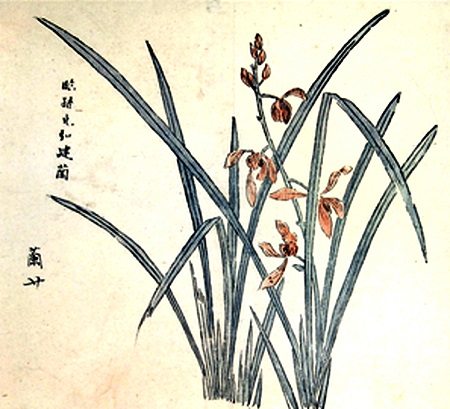
Another Ming Dynasty artist, Hu Zhengyan, was also a printer and calligrapher. He was a traditionalist who featured a variety of simple, natural themes in his painting. The image presented here is “Orchid”.  In the orchid many see qualities of humility and grace. The orchid blossoms in remote locations and often exudes its fragrance in solitude. The nobility of quiet repose is much admired in classic Chinese art and poetry.


Art Literacy

art literacy excerpt2
Clementine Hunter


In November of 2016 I read about a symposium that addressed the challenge of educating immigrant children.  The symposium was held at the Roosevelt School District, in Roosevelt, New York.  Not long after this symposium was held, I read that research indicates children from disadvantaged backgrounds benefit from cultural enrichment.   These two bits of information were connected in my mind and from that connection grew the idea for Art Literacy

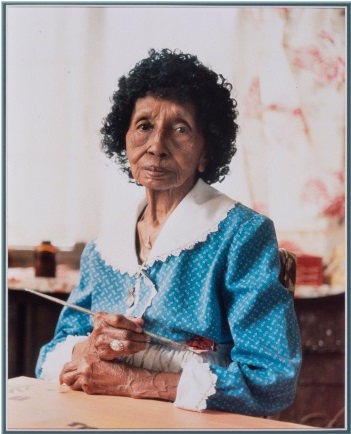
Art Literacy is a showcase for artistic expression, and an invitation to create art.  The picture at the top of the page, of Clementine Hunter, and the excerpt below this paragraph, are typical of material students will find in the book.   A total of forty-three feature images are presented.  At least one smaller image accompanies the feature image.   In the case of Clementine Hunter, there are two feature images and two companion images. 

A caption that describes Clementine Hunter’s personal history:

clementine Blurb

A smaller image that helps to introduce Clementine Hunter to students:

clothesline website
Clothesline, by Clementine Hunter.  The Picture is Credited to the Ethel Van Derlip Morrison Fund.


With every picture, there is an invitation to act.  Students are asked to write a response and to create a visual work of art.  They are reminded of art’s essential nature:  It is a genuine expression of an individual’s perspective and experience.   

The kinds of images featured in Art Literacy range from a Sami family (Lapland) posing in front of a traditional residence, to children playing along the seashore in Zanzibar.  Subjects covered include Stone Age cave art and NASA space missions.  

There are quotes from James Baldwin, and there is poetry from Rabindranath Tagore. 

The question is asked at the beginning of the book, What is art?  By the end of the book, students may be prepared to answer,  Art is a form of communication, a way for people to share their perceptions and insights.

A supplemental guide to Art Literacy has been created.  This consists of keyed sheets that offer background information on some of the covered topics.   The sheets can be copied and distributed to students who want them.

Collages introduce the five thematic sections: Animals in Art, Fantasy in Art, People in Art, Places in Art and Things in Art.  The collages are visual demonstrations of the book’s operating theme: Let imagination be the guide as experience and perception are explored.

A representative collage, from the section entitled Fantasy in Art, is shown below:


collage fantasy elsas pig2 website

Art Literacy is for sale on Amazon.  However, the long-term plan is to set up an apparatus through which the book and accompanying material can be distributed, at no cost, to students.  


art literacy front cover website


A. G. Moore    June, 2017