Complete Nonsense: Book Review


review champman AlbertiDisk1
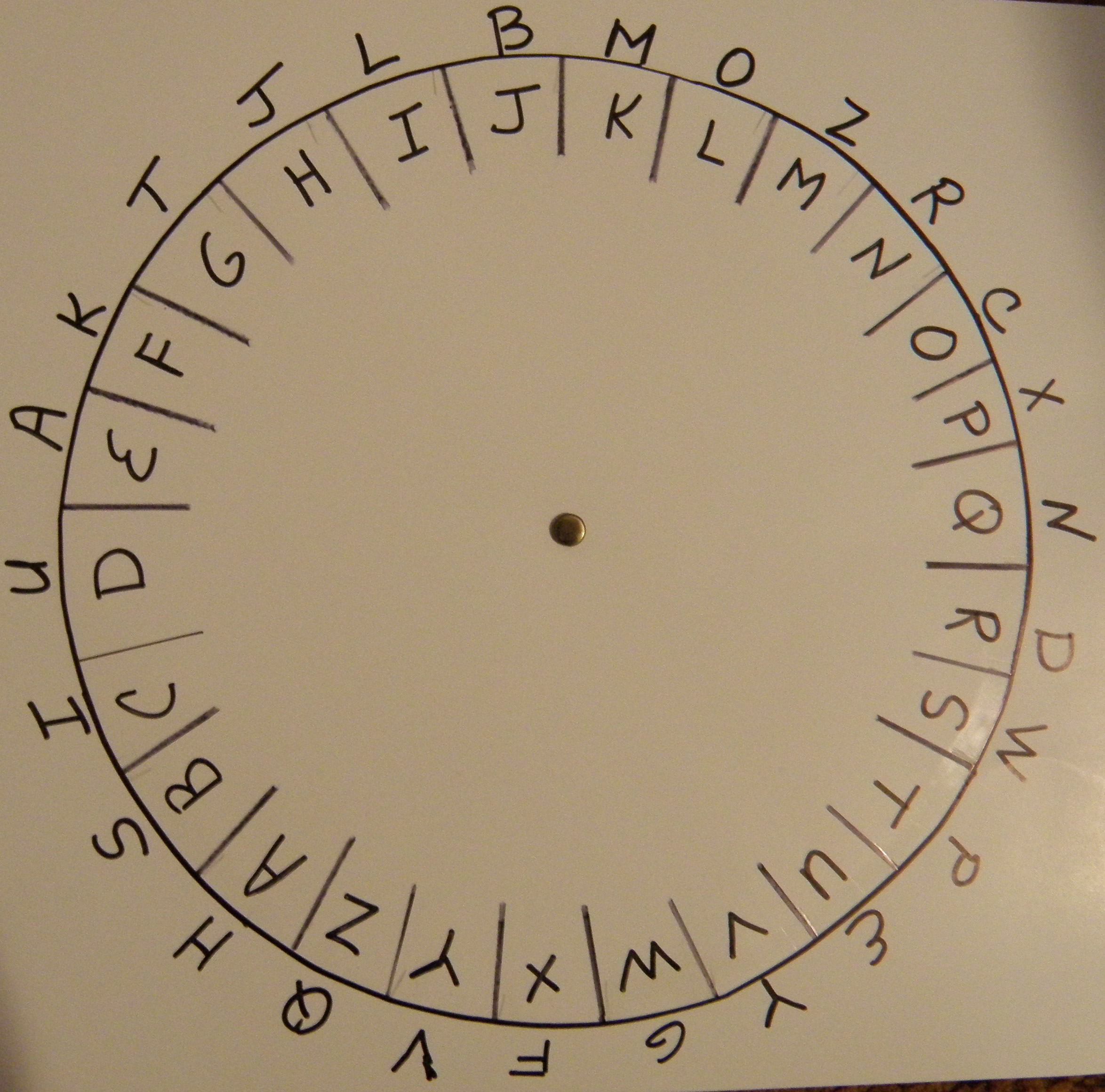
Picture of an Alberti cipher disc, by J. Stempin


By M. Chapman

Molds can be broken. Sometimes it’s by accident and sometimes it’s deliberate. In the case of Mr. Chapman’s poems/piece/essay–the rupture is definitely deliberate. His selection and arrangement of words in Complete Nonsense is almost like a Rorschach test that either disguises intent or bares the psyche. I think, for Mr. Chapman, the latter may be true–although he is clever, clever enough to create a maze that leads nowhere.

There is nothing unrestrained about Mr. Chapman’s utterances. His discipline in stringing together seemingly unrelated terms in a splatter is a little like Jackson Pollock’s spilling paint on a canvas. Did Pollock toss paint willy nilly, without thought or plan–or did he attempt to create a unified whole? Do Pollock’s and Mr. Chapman’s apparent randomness reflect chaos?  Or is their work an exploration of associating and disassociating elements?

I don’t know.

It appears that central concerns of Mt. Chapman’s psyche are laid bare here–of course that may be a ruse. Some sections in the piece might be unsettling to a subset of readers. Scatological references abound. If this is a portal into the subconscious, though, Freud would say this is to be expected.

There is no way for me to recommend or not recommend Mr. Chapman’s work to a general audience. I don’t think it’s intended for that audience. Certainly, I can’t quantify my opinion with a star system. Mr. Chapman achieves what he set out to do. He breaks a mold. But this is not what most readers expect to find in an Amazon highly rated work.

However, I do give Complete Nonsense a qualified endorsement. If you are interested in language and in exploring the different ways language may be used, then read this book. Mr. Chapman deftly manipulates words, or parts of words. What he has done deserves the attention of intelligent readers.


A. G. Moore
 

Why Are You a Writer?

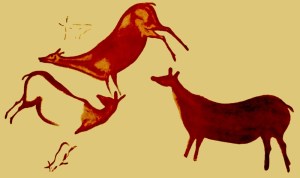
cave art La_Pasiega-Galeria_A-Ciervas_(panel_22)
Cave art from La Pasiega, in Cantabria, Spain; Author: Hugo Obermaier, 1913. This work is in the public domain.


The human effort to leave a record may be seen in cave art dating back 40,000 years.  What prompted these impulses?  Were early humans teaching a lesson?  Leaving a message?  Were they expressing devotion to a deity or satisfying an inchoate desire for self-fulfillment?  Unknowable as the answers to these questions are, so too, for many of us, is the answer to the question, “Why are you a writer?”

Writing is certainly not the most dependable way to earn money.  And it is a career that carries with it the risk of severe, personal criticism.  So, why write?

I have been writing since I was a child.  For me, writing is a way to communicate.  There are other paths to communication–music, art and dance, for example.  Sadly these avenues are not open to me.  Though I express myself with joy through many art forms, I don’t communicate well through them.  They remain my private pleasures.  Words, however, are malleable in my hands.  I mold them, sometimes nimbly, until they convey my intentions in a way that others can understand.  That’s communication.  That’s why I write.

Was I born a writer?  There’s a school of thought that holds some people are born artists and some are not.  I’ve never subscribed to this view.  Give children crayons and they color.  Read nursery rhymes to them and they respond to the cadence of words.  Creativity and art, I believe, are intrinsic to human nature.  Talents vary, as do life influences and opportunity.  The role each of these played in my choice to write–that is impossible to sort out.

I’m a writer.  I’m comfortable in the role and believe I understand the reasons for my choice.

Why are you a writer?


Prologue to Arrows Axes and Scythes


witness2
Witness: an illustration from Arrow Axes and Scythes

Below is the Prologue to my upcoming illustrated memoir, Arrow Axes and Scythes.  While the book recalls a time long passed, the influence of those years lasted a lifetime.  The Prologue explains the author’s attempt to convey the emotional content of memory without distorting the essential truth of events.

We are all invisible witnesses. If not for this, how many crimes would be reported?

I think we imagine that children do not see and if they see they do not understand. We reassure ourselves, as we carry on in our imperfect ways, that even if they understand they surely will forget. But the mind is not so dependably careless with its impressions. Many remain for a lifetime.

The events recorded in this book occurred more than fifty years ago, when I was a child. Some memories are lost to me, yet many come back. Are these accurate? Perhaps. Perhaps not. Ideas are not preserved in amber. They are subject to the whims of experience and bias.

My childhood was a time of secrets. Much that is revealed here was never meant to be public. But what I could not say then, will now be told.

At the end of the book one of the personalities, my father, offers testimony for himself. A letter exists in which he describes motivation for his actions. Readers may weigh this evidence and decide for themselves whether or not the document supports my value as a witness.


An excerpt is offered in another blog on this site: A Burial