Art Literacy

art literacy excerpt2
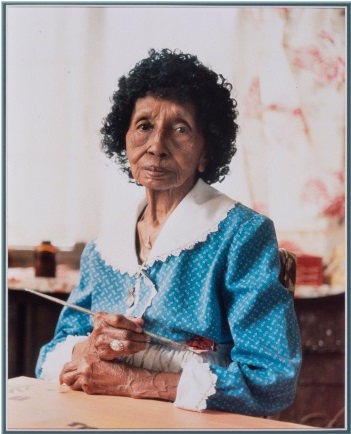
Clementine Hunter


In November of 2016 I read about a symposium that addressed the challenge of educating immigrant children.  The symposium was held at the Roosevelt School District, in Roosevelt, New York.  Not long after this symposium was held, I read that research indicates children from disadvantaged backgrounds benefit from cultural enrichment.   These two bits of information were connected in my mind and from that connection grew the idea for Art Literacy

Art Literacy is a showcase for artistic expression, and an invitation to create art.  The picture at the top of the page, of Clementine Hunter, and the excerpt below this paragraph, are typical of material students will find in the book.   A total of forty-three feature images are presented.  At least one smaller image accompanies the feature image.   In the case of Clementine Hunter, there are two feature images and two companion images. 

A caption that describes Clementine Hunter’s personal history:

clementine Blurb

A smaller image that helps to introduce Clementine Hunter to students:

clothesline website
Clothesline, by Clementine Hunter.  The Picture is Credited to the Ethel Van Derlip Morrison Fund.


With every picture, there is an invitation to act.  Students are asked to write a response and to create a visual work of art.  They are reminded of art’s essential nature:  It is a genuine expression of an individual’s perspective and experience.   

The kinds of images featured in Art Literacy range from a Sami family (Lapland) posing in front of a traditional residence, to children playing along the seashore in Zanzibar.  Subjects covered include Stone Age cave art and NASA space missions.  

There are quotes from James Baldwin, and there is poetry from Rabindranath Tagore. 

The question is asked at the beginning of the book, What is art?  By the end of the book, students may be prepared to answer,  Art is a form of communication, a way for people to share their perceptions and insights.

A supplemental guide to Art Literacy has been created.  This consists of keyed sheets that offer background information on some of the covered topics.   The sheets can be copied and distributed to students who want them.

Collages introduce the five thematic sections: Animals in Art, Fantasy in Art, People in Art, Places in Art and Things in Art.  The collages are visual demonstrations of the book’s operating theme: Let imagination be the guide as experience and perception are explored.

A representative collage, from the section entitled Fantasy in Art, is shown below:


collage fantasy elsas pig2 website

Art Literacy is for sale on Amazon.  However, the long-term plan is to set up an apparatus through which the book and accompanying material can be distributed, at no cost, to students.  


art literacy front cover website


A. G. Moore    June, 2017


The Rise of Prince: 1958-1988 Book Review

An icon, by its nature, is symbolic. Herein lies the difficulty for creatures of flesh and blood who are declared icons. This is an impossible standard to meet, and yet it is one we set for public figures on a regular basis. Just as regularly, they disappoint. As I read The Rise of Prince: 1958-1988 I became aware of the gap between image and reality. This gap exists not because of anything Prince failed to do. It exists because of an ideal I created, an ideal that was important to me. Therein lies the peril of reading the biography of someone we idealize.

The Rise of Prince: 1958-1988, is a responsibly-researched and well-written book. It offers an impressive amount of information about musicology and the music industry. The book’s authors, Alex Hahn and Laura Tiebert, delve deeply into the background and early life of Prince. They do so without engaging in pop psychology. Whatever conclusions may be drawn about Prince’s psyche, the authors leave that work to the reader. This is appropriate.

Any disappointment readers might feel about this book will likely come from the fact that it does not bring Prince’s biography up to the present. Of course, the authors don’t promise to do that. Even so, as the book concluded I wanted to read beyond, to understand how Prince ended up overdosing in the elevator of his home. The Rise of Prince: 1988-2016 would therefore be welcome.

The Rise of Prince: 1958-1988 does not induce snap judgments about the performer’s personality. The narrative crafted by Hahn and Tiebert is too textured for that. One unavoidable conclusion, though, is that Prince did not form enduring bonds with associates. He guarded his prominence in the music world and in public. Those colleagues who distracted, even innocently, from his star stature, did not remain in his close circle.

Prince was a natural-born artist, the son of two performers. His talent was noted in early childhood and his unique skills recognized throughout his career. The most surprising part of this biography for me was that ambition for commercial success was a prime motivator in his life.

Whatever mix of natural talent, inspiration and ambition led to his output, Prince had an undeniable influence on the music of his time, and on musicians who came after. He was a human being, and a legend. The difficulty of reconciling these two realities becomes clear in The Rise of Prince: 1958-1988. The authors’ relative success in achieving this reconciliation makes the book a worthwhile read.

May/2017