Try to see the blank page as an opportunity and not a challenge.
By A. G. Moore
You’re probably reading this essay because you want to improve your writing skills. That is the first and most important step on the path to good writing. The next step is easier. Pick up your instrument of choice–a pen, a pencil, a keyboard–and start writing.
Writing is like speaking. At first, when you begin–whether it’s a foreign language or your native language in the early years of life–speaking requires great effort. You struggle for the correct phrase. You stumble and make mistakes. After a while, as you practice and use language on a daily basis, your speech becomes smoother. You think less about how you say something and more about what you want to say. This is fluency.
Fluency is the goal in writing and is achieved in exactly the same way that it is accomplished in speech: practice. The more frequently you write, the more fluent your writing becomes. Once fluency is achieved, certain techniques and rules will help to make the writing more effective. These rules and techniques are easily mastered, but they won’t work unless you have something to use them on. So write–anything. Write what you’d like to say. Worry about correctness later.
Organization, grammar, style–these will come with time. Think of the pieces you write as blocks of clay. Each time you start out there is no shape, no form to the clay. As you begin to mold you have an idea of what you would like to see at the end of your sculpting. After the first cuts, the lump of clay won’t look like anything. After a while, as you shape a crude form, you can go back with your chisel and refine your art.
That’s exactly what happens in most writing.
Of course, there are exceptions. There are brilliant masters who have a touch of genius. Words pour from them as water does from a fountain. Most of us don’t have that gift. Most of us will settle for communicating effectively. If that is your goal, then form an idea, sit in front of a blank page and begin to express your idea. Once you have words on a page, once you have the rough clay crudely formed, you can use basic techniques to fashion a finished product. Logic, grammar, style–these are just carefully targeted cuts in the clay. They can be added and adjusted as the piece takes shape.
The more often you engage in the process of writing, the more fluent you will become. If you doubt this, think about the way you learned to speak. You’ll realize that the separation between the spoken word and the written word is merely a matter of perspective and familiarity. Both of these are in your control and really present no barrier at all.
In the book, Looking Back, Looking Forward, the author speaks of leaving her country home and moving to New York City. The train station above was likely one that was the departing point for her new life; it was likely the last place she saw as headed into the future.
Looking Back, Looking Forward was written as a demonstration book, not as a straightforward memoir, but the details in the book are all true–at least as true as memory will allow. The author of the book speaks of a kind of longing for the country home left behind. This rupture in her life took place when she was a child and had little control over her destiny.
It is obvious from the events described in the book that the author’s family left their country home for good reason. Nonetheless, this departure was experienced as a loss and the loss is palpable throughout the book.
The picture of the train station above captures the sense of quiet solitude the author seems to miss. There is in this scene nothing of the bustle she describes of her new home in Brooklyn.
This slim volume was created as a demonstration book for the writing manual, “Ten Steps to Writing Your Memoir”. Though “Looking Back Looking Forward” was not intended to be a full-blown memoir, it has within it the inescapable emotions that recollecting any life may evoke.
Banyan tree: Efate, Vanuatu, 13 April 2008 Author: Phillip Capper from Wellington, New Zealand Used under Creative Commons 2.0 Attribution license
I’ve just finished another book. If you’ve ever written one, or attempted to write one, you know this takes a lot of patience and effort. In my case, research is a major part of the process. It doesn’t matter if I’m writing fiction or nonfiction, I always do background work.
There was a book of fiction I wrote once that referred to an unspecified island. The setting needed to be pristine, a place where both humans and the earth were in a primitive state.
To make my story believable, I researched the history of New Zealand (worked for Peter Jackson, didn’t it?). The origins of the Maori and their traditions became the cultural template upon which my characters were built. Even the tree in my story was believable.
That book (a little over 85,000 words) was shelved and never will again see the light of day. No matter. I learned, not only about New Zealand and banyan trees, but also about writing and publishing. As I look back on my 85,000-word book and the difficulty of physically preparing it for publication, I smile. So much of what I do routinely now was a struggle back then.
While it’s true there’s nothing like experience and each of us has to learn by doing, it’s also true that information can be shared. That’s what this blog is about. I’m sharing some hard-earned information about self-publishing. There are no writing tips in this post, except for the basic suggestion that we should keep at it. Information is limited to my experience only and may not help anyone else. That said, this is what I’ve learned.
Three formats that have been indispensable to me are Amazon Kindle (ebook), Amazon CreateSpace(print), and Smashwords (ebook). The print format is the easiest because it is the most literal; that is, what you see in the PDF conversion is likely what you will see in print. Documents have to be uploaded as PDFs in order to be processed by CreateSpace for publication.
Both Kindle and Smashwords require a little more TLC, which some authors seem to resent. They seem to resent especially the formatting demands made by Smashwords. Let me be upfront about this attitude: What?
I wrote an 85,000-word book and can’t take the time to format it properly? Doesn’t make sense to me.
Every book I’ve ever published (and unpublished–there have been a few of those) has been formatted for Smashwords. Smashwords is a powerful distribution tool. Apple, Sony, Kobo, Barnes&Noble–the list goes on. All of these vendors receive books from Smashwords. The trick to getting your work into the hands of these vendors is to format it in a very precise way. If you do that successfully, Smashwords puts your book in the “Premium Catalog” and the world opens up.
So why do many authors give up on Smashwords? I don’t know. I figured out long ago to keep things simple for this publisher. Limit exotic formatting. Give up on stylistic quirks that you think might make your book attractive. Not worth it. And, if you have pictures, make sure they are at a low resolution (96 dpi) and that they are anchored to the page “as character” (in Open Office, which is what I work in).
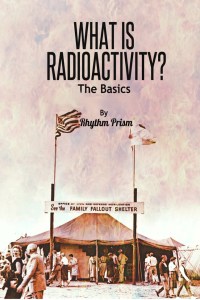
Smashwords issues a Style Guide. The book is free and very detailed. Follow the rules in that book and you should have little trouble. Of course, my last book, What Is Radioactivity? The Basics, was uploaded six times before I got it right. But that took maybe a couple of hours. Took a lot longer to write the book.
Kindle has its own distinct formatting issues. One tip I picked up a long time ago was to indent each first line in a paragraph by .01. Failure to do this results in some pretty weird stuff, especially if you have block formatted your piece, as I always do. .01 is barely visible to the eye and yet it keeps Kindle from messing with the block style I desire.
As with Smashwords, anchor your pictures “as character” or they are likely to float into odd places. Kindle doesn’t seem to mind bold or varied font size. By all means, if you want a clean page break, then indicate that in the formatting menu on your toolbar.
I’ve noticed that my books do not look as good in the Kindle version as they do in the Smashwords version or in print. My last book (the one on radioactivity) was uploaded ten times before it looked acceptable on Kindle.
Finally, proof your copy after you’ve uploaded in each format. Unpleasant surprises are likely to show up. These include not only peculiarities of formatting, but also your own human error. In this last book, for example, I had published and proofed thoroughly three versions: Kindle, Smashwords and Createspace.
I read through one more time, while the books were live, and was horrified to see that I had referred to ‘nineteenth’ century scientists as ‘eighteenth’ century scientists. I know very well what ‘eighteenth’ century and ‘nineteenth’ century mean, but that did not prevent me from making this egregious error. I had to pull all the books down and correct.
As I write this post, I’m looking forward already to my next project. For me, book-writing is a release from reality, although, the irony is that I mostly write about ‘real’ things. There are a lot of ideas floating around in my head right now. One thing certain is that my next subject will not be familiar to me. That would be too easy. I guess I’m like a marathon runner who has to keep testing limits. There is one difference, though. At the end of a race, a marathoner has memories, and a very tired body. At the end of one of my projects, I have a book, and a very tired body.
Check out my latest book, if you have a chance. It’s pretty good, I think. Available in print (of course) and ebook on Smashwords and Kindle. Two versions of the book are offered: one has a workbook included for students with solid reading skills. The other version is suitable for anyone who knows little about radioactivity and would like to understand the history and science of it better.
One more point: I can write a book and publish a book. When it comes to marketing, that’s a blog someone else will have to write.


 Rhythm Prism Publishing