Complete Nonsense: Book Review


review champman AlbertiDisk1
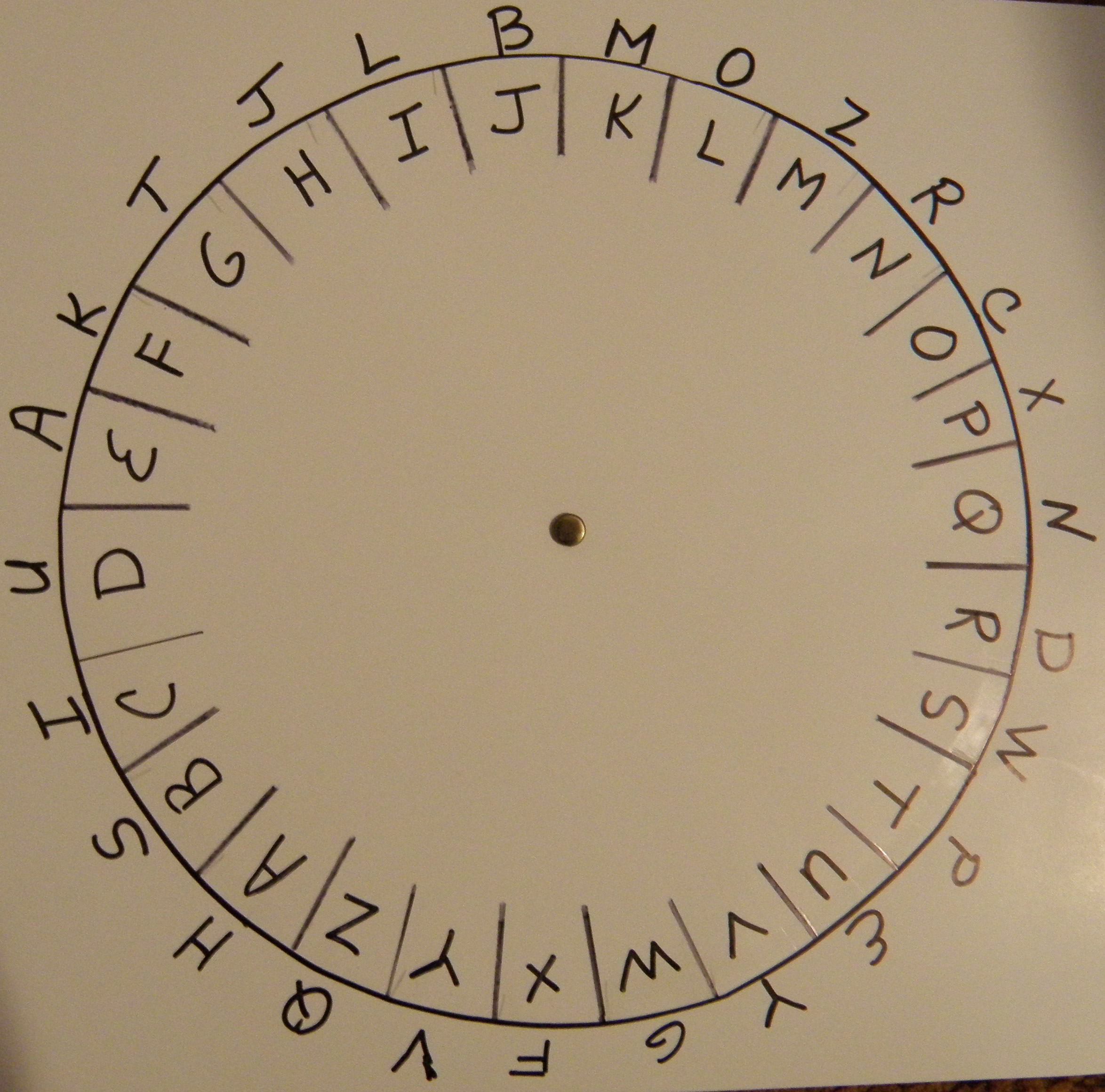
Picture of an Alberti cipher disc, by J. Stempin


By M. Chapman

Molds can be broken. Sometimes it’s by accident and sometimes it’s deliberate. In the case of Mr. Chapman’s poems/piece/essay–the rupture is definitely deliberate. His selection and arrangement of words in Complete Nonsense is almost like a Rorschach test that either disguises intent or bares the psyche. I think, for Mr. Chapman, the latter may be true–although he is clever, clever enough to create a maze that leads nowhere.

There is nothing unrestrained about Mr. Chapman’s utterances. His discipline in stringing together seemingly unrelated terms in a splatter is a little like Jackson Pollock’s spilling paint on a canvas. Did Pollock toss paint willy nilly, without thought or plan–or did he attempt to create a unified whole? Do Pollock’s and Mr. Chapman’s apparent randomness reflect chaos?  Or is their work an exploration of associating and disassociating elements?

I don’t know.

It appears that central concerns of Mt. Chapman’s psyche are laid bare here–of course that may be a ruse. Some sections in the piece might be unsettling to a subset of readers. Scatological references abound. If this is a portal into the subconscious, though, Freud would say this is to be expected.

There is no way for me to recommend or not recommend Mr. Chapman’s work to a general audience. I don’t think it’s intended for that audience. Certainly, I can’t quantify my opinion with a star system. Mr. Chapman achieves what he set out to do. He breaks a mold. But this is not what most readers expect to find in an Amazon highly rated work.

However, I do give Complete Nonsense a qualified endorsement. If you are interested in language and in exploring the different ways language may be used, then read this book. Mr. Chapman deftly manipulates words, or parts of words. What he has done deserves the attention of intelligent readers.


A. G. Moore


From A Sky’s View: Book Review


By. Brandon L. Jackson

In “From A Sky’s View”, Brandon L. Jackson demonstrates the skill and insight of an artist. Like every artist he is burdened with his insight, and, like a fortunate few, he has the eloquence to share his vision. I think if he did not, the weight of deep feeling might be unbearable.

Oral tradition is rich in these poems. The ear is pleased by their cadence. Rhyming is occasional but always there is music in the words. Mr. Jackson’s concerns are specific to his experience–which has been different from mine–and yet his appeal is universal. I have never heard a gun go off in the street below my apartment. I’m invisible to the police–I get a pass, because of my background and my complexion. Mr. Jackson speaks, specifically, for others

“for those
Who have felt less human
Less Angel
and even more so
Less chosen”

and yet, I hear him. That is the power of his gift. It is a rare gift, that takes me where I have not been, that helps me to understand what I have not known.

“From A Sky’s View” is a slim volume, dense with gems and wisdom. I highly recommend Mr. Jackson’s book of poems.


A. G. Moore

Girl Poems: Book Review


nikada wilson picture 2 for review Corean_beauty
This 1904 painting from South Korea is entitled “Corean Beauty”.  The picture was provided by the Cornell University Library and is free of copyright restriction

By Nakada Wilson and Guests

Girl Poems, by Nakada Wilson and Guests, offers an intriguing collection of poetry. The book provides a platform for voices rarely heard in mass-marketed books. Ms. Wilson, and her guest writers, do not share a unified view, but they do share a perspective. That perspective reflects the experience of being female. This is startling in a literary universe where the default gender is male.

The concerns of Ms. Wilsonare are not limited to gender issues. These poems are about addiction, love and compulsion. One poem, Sullen Secrets, for example, deals with “cutting”, a compulsion to self-harm. While articles abound in medical literature about this syndrome, in Ms. Wilson’s poem, “cutting” is not a syndrome–it is a profoundly personal experience. There are no excuses or explanations for the behavior, but readers are given insight into how it feels to be caught up in the cycle of this act.

Females and males are not alike. Perhaps, in many ways, they are born the same, but this changes over time. One thing that struck me about the poems was the mention of mirrors and the focus on appearance. This is not an expression of vanity, but of burden, and it is distinct from what is traditionally found in poems authored by males. In Christa, for example, Ms. Wilson writes,

A hot 16

Body tight, morals loose

Vitamins and Four Lokos-

Breakfast.

No need for much else

There is a place for this voice in literature. Ms. Wilson is articulate and expressive (as are her guest authors). Good poetry enhances understanding viscerally. Ms. Wilson does this very well. I enthusiastically recommend her book, Girl Poems.


A. G. Moore